


A homeowner’s water heater just let go in the basement. They grab their phone, type “plumber near me”, and call one of the first three names they see.
Nobody compares six websites while water is spreading across the floor.
Home services SEO is the work of being one of those names. Not for traffic, and not for a ranking report. For the call, from a homeowner in your service area, at the moment they need you.
This guide covers the SEO strategies that work for home service businesses: the map, the reviews, the website, the paid placements above them, and AI search. Then it breaks down what changes by trade, because a roofer’s customers don’t search the way a plumber’s do.
Key Takeaways
The map comes first. Google ranks local results on relevance, distance and prominence, and Whitespark's survey of local SEO experts puts your primary Google Business Profile category at the top of the list.
Most contractors should hide their address. Google tells service-area businesses to hide their address and keep the service area within about 2 hours of driving from where they're based.
Reviews have to be recent. BrightLocal's 2026 survey of 1,002 US adults found 97% read online reviews and 74% look for ones written in the last three months.
Your website needs a page per service. "Water heater replacement" and "emergency plumber" are different searches from different homeowners, and one services page can't rank for both.
Every trade searches differently. Plumbing and pest control lean on emergencies, roofing spikes after storms, and remodeling buyers research for weeks before they call.
Local Services Ads changed in October 2025. Google replaced the Google Guaranteed and Google Screened badges with one Google Verified badge and ended the money-back guarantee.
AI search is pickier than the map. SOCi's study of about 350,000 locations found they appeared in Google's 3-pack 35.9% of the time but were recommended by ChatGPT just 1.2% of the time.
What Is Home Services SEO?
SEO (search engine optimization) is the work of getting your business to show up when someone searches for what you do. Home services SEO points that work at one customer: a homeowner, in the area you serve, who needs a job done. Online visibility only counts when it turns into that call.
It splits into two jobs.
Local SEO is about the map. Search “AC repair near me” and Google shows a map pack: three local businesses with star ratings, hours and a call button. Getting in comes down to your Google Business Profile, your reviews and how close you are to the searcher. That’s the side we handle with our local SEO services.
Website SEO is about the results under the map. Someone typing “heat pump vs furnace cost” isn’t calling today. They’re planning a big job, and the home service company whose page answers them is the one they call next month.
Most home service contractors need both, in a mix that depends on the trade. If you’re a single-location shop just starting out, our guide to local SEO for small business covers the fundamentals.
Where Homeowners Actually Find You On Google
A search for a home service pulls up a lot more than ten blue links. On a phone, the first organic result can sit several sections down.
| Placement | What it is | How you pay | How you get in |
|---|---|---|---|
| Local Services Ads | Sponsored listings with a Google Verified badge | Per valid lead (a call, message or booking) | Pass Google's license, insurance and background checks, then bid |
| Google Ads | Text ads marked "Sponsored" | Per click | Keywords, bids, ad quality |
| Map pack | Three local businesses on a map | Free | Google Business Profile, reviews, distance, prominence |
| Organic results | The regular links under the map | Free | Service pages, content, links, technical health |
| AI Overviews and AI Mode | An AI-written answer near the top | Free | Being described clearly and consistently across your site, profile and the web |
The order shifts by trade, city and device, and Google doesn’t promise LSAs a fixed spot. Don’t plan around one layout.
How Google Decides Which Contractor To Show
Google’s Business Profile help page says local search results are based mainly on three things:
- Relevance: how well your profile matches what someone searched.
- Distance: how far you are from the searcher, or from the location in their search.
- Prominence: how well known your business is, which Google says includes links to your website and your review count and score.
Google also says there’s “no way to request or pay for a better local ranking.” Ads sit above the map. They don’t change who’s in it.
Whitespark’s Local Search Ranking Factors report, the survey of local SEO experts published in November 2025, ranks the primary Google Business Profile category as the single biggest map pack factor, ahead of distance and keywords in the business name.
Distance hits contractors hard. If your shop is in one town and you serve twelve, your local rankings will be strong near the shop and fade farther out. Service pages, reviews that mention the towns you work in, and local links are how you extend that reach.
Search your three money terms from your phone, logged out, once from the shop and once from the far edge of your service area. The map changes with every mile, and that's the map your customers see.
- plumber near me
- ac repair [town]
- roof leak repair
Optimize Your Google Business Profile First
Your Google Business Profile (formerly Google My Business) is the free listing behind the map pack, Google Maps, the panel beside desktop results, and much of what AI tools say about you. Optimizing your Google Business Profile is the highest-return hour you’ll spend on SEO. Google says businesses with complete, accurate information are more likely to show up in local results. These are the fields that matter most for contractors.
| Profile field | What to set | Why it matters |
|---|---|---|
| Address | Hidden, unless customers come to a staffed location | Google tells service-area businesses to hide their address |
| Service area | The towns or ZIP codes you actually work, within about 2 hours of driving | Google's guideline. Listing the whole state doesn't make you rank across it |
| Primary category | The most specific match: Plumber, HVAC Contractor, Electrician, Roofing Contractor, Landscaper, General Contractor, Pest Control Service, Moving Company | Whitespark's survey ranks it the #1 map pack factor |
| Secondary categories | Only the ones you really are, such as Water Heater Installation Service | Google says use as few as you need, never as keywords |
| Business name | Your real name, nothing added | Keyword-stuffed names break Google's rules and get edited or suspended |
| Services | Every service you offer, each with a description | Helps Google match searches like "drain cleaning near me" to you |
| Hours | Real hours, and 24/7 only if someone really answers at 2 a.m. | "Open at time of search" is a top-five factor in Whitespark's survey |
| Photos | Your trucks, your crew, real jobs before and after | Homeowners are letting you into their house. Show them who's coming |
| Posts | Seasonal offers, storm availability, finished jobs | Google archives posts after six months unless you set a date range. They don't vanish in a week |
For the field-by-field walkthrough, see our Google Business Profile checklist and the longer Google Business Profile optimization guide. If you run more than one shop, each staffed location gets its own profile; our multi-location SEO page covers how that works.
Audit Your Profile Line By Line
The Google Business Profile Optimization Checklist is the same list we work through with clients: categories, service area, services, hours, photos and reviews. Print it and check your profile against it.
Download the GBP ChecklistCustomer Reviews Decide Which Of The Three Gets The Call
Reviews feed the prominence signal Google describes, and they decide which of the three map listings potential customers tap.
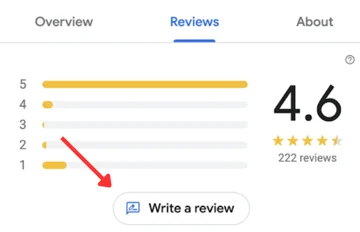
BrightLocal’s Local Consumer Review Survey, which polled 1,002 US adults in early 2026, found that 97% of consumers read online reviews, 80% are likely to use a business that responds to all of its reviews, and 74% look for reviews written in the last three months. A contractor with 300 reviews and none since last spring looks like one who stopped answering the phone.
Ask every customer. Google’s policy lets you encourage genuine reviews. It bans asking only satisfied customers, discouraging negative reviews, and offering anything in return.
Ask right after the job, when the problem is fixed. A text with a direct link beats a request buried in an invoice.
Reply to every review. Thank the good ones. Answer the bad ones calmly, once, and take the conversation offline.
The Text Your Techs Send Before They Leave The Driveway
Naming the service and the town nudges customers to mention both in their review, which helps Google match you to those searches.
Build A Website That Ranks For Every Service You Sell
Your profile gets you into the map for “plumber near me”. Your website ranks for everything else, and it’s where most home service companies leave the most work undone. This is on-page SEO: the pages, words and structure Google reads.
Sort Your Keywords By How Close The Customer Is To Calling
Keyword research starts with your phone, not a tool. Ask whoever answers your calls what customers ask for and how they say it, then check those phrases in a keyword tool.
| Search type | Examples | Who's searching | Where it should land |
|---|---|---|---|
| Emergency | emergency plumber near me, ac not working, roof leaking | Has a problem now, calling today | A service page with tap-to-call at the top |
| Service | water heater replacement [town], panel upgrade cost, kitchen remodel [city] | Comparing companies for a planned job | One service page per service |
| Problem | why is my ac blowing warm air, breaker keeps tripping, signs of termites | Knows the symptom, not the fix | A blog post or FAQ that links to the service page |
Most of your competitors ignore the problem searches. A homeowner searching “water heater making popping noise” will hire someone soon, and a page that explains the cause, the cost and when to call a pro catches them before they’ve picked a company.
What Every Service Page Needs
One “Our Services” page listing fifteen services ranks for none of them. Each service page should cover:
- What the service is and when a homeowner needs it, in the words they use.
- What the job involves and what affects the price, with a range if you can give one. “Water heater replacement cost” is its own search.
- Proof: photos of real jobs, reviews that mention this service, licenses and warranties.
- A way to book on the page, with a tap-to-call phone number on mobile.
Title tags follow the same pattern, “Water Heater Replacement in [Town] | [Company]”, kept under about 60 characters.
Service Area Pages Without The Spam
Service area pages (also called location pages), one per town you serve, extend your reach past the town your shop sits in. They only work when each page has something real on it: jobs you’ve done there, reviews from customers there, the local permit or housing issues your crew deals with.
Twenty copies of one page with the town name swapped are a liability. Google’s spam policies name “pages targeted at specific regions or cities that funnel users to one page” as doorway abuse. Build pages for the towns where you have real jobs, and add more as you earn them.
How Home Services SEO Changes By Trade
Every trade uses the same tools. What changes is how customers search, when, and which tool matters most.
| Trade | Search type | Peak season | Top priority |
|---|---|---|---|
| Plumbers | Mostly emergency | Winter (frozen pipes), year-round | Real 24/7 hours and tap-to-call |
| HVAC | Emergency and planned | Summer and winter | Seasonal service pages and problem content |
| Electricians | Mixed | Year-round | Pages for planned upgrades, license on every page |
| Roofers | Storm-driven and planned | Spring through fall, after storms | Photo galleries, storm and insurance content |
| Landscapers | Planned | Spring and fall | Photos and town-level service area pages |
| General contractors and remodelers | Planned, long research | Spring planning season | Project pages with cost ranges |
| Pest control | Emergency and seasonal | Spring through fall | One page per pest |
| Moving companies | Planned, date-driven | Summer | Reviews, quote form, USDOT number |
Plumbers
Plumbing is the most emergency-heavy trade here. Customers search “emergency plumber near me”, “burst pipe” and “no hot water”, and call whoever looks open and close. For those searches, the map pack and your profile hours decide who gets the job. If you list 24/7 hours, someone has to answer at 2 a.m.
The planned side, water heater replacement, repiping and sewer line work, is where your website matters most. Those are high-ticket jobs homeowners price out first, so each one needs its own page with a cost range. Our guide to SEO for plumbers covers both sides in detail.
HVAC Companies
HVAC demand follows the weather. “AC repair” climbs with the first heat wave and “furnace repair” with the first cold snap, and the companies that win had their seasonal pages ranking before the rush.
HVAC customers also search in symptoms: “ac blowing warm air”, “furnace short cycling”, “heat pump freezing up”. Each one is a problem page that leads to a repair call. System replacements are big purchases, so pages on heat pump vs furnace, financing and rebates reach homeowners weeks before they buy. Give maintenance plans their own page too.
Electricians
Electrical searches split between urgent and planned. “Power out in half the house” and “breaker keeps tripping” get a call today. “Panel upgrade”, “EV charger installation” and “whole home generator” are planned jobs homeowners research and price first.
Build a page for each upgrade you want more of. Electrical work also carries a safety worry, so put your license number, insurance and permit process on every service page. Homeowners check. Our guide to SEO for electricians covers the license question, upgrade pages and commercial work in detail.
Roofers
Roofing demand spikes after storms. “Roof leak repair”, “storm damage roof” and “hail damage inspection” surge in the days after bad weather, and the roofers who get those calls already ranked in those towns.
Roofing customers are wary, because storm-chasing crews give the trade a bad name. Trust signals carry extra weight: years in the area, manufacturer certifications, a photo gallery of finished roofs in named neighborhoods, and reviews that mention specific towns. A page explaining how roof insurance claims work, and where you fit in, answers a question every storm customer has.
Landscapers
Landscaping is planned and seasonal. Lawn care, spring cleanup and hardscaping searches climb in spring, and fall cleanup follows later. Nobody needs a landscaper at 2 a.m., so the website does more of the selling.
Two things matter most. Photos, because landscaping is visual: your profile and project pages should show real yards you’ve finished, labeled by town. And service area pages, because most landscapers serve several towns and customers search by town. Keep recurring maintenance and design projects on separate pages; they’re different buyers with different budgets.
General Contractors And Remodelers
Remodeling has the longest research cycle on this list. A homeowner planning a kitchen or bathroom remodel reads about costs, timelines and design ideas for weeks before calling anyone. “Kitchen remodel cost [city]” and “how long does a bathroom remodel take” are the searches that start the job.
That makes content the biggest lever. Build a project page for each type of job, with a realistic cost range, a timeline and photos from finished work. A portfolio of local projects, organized by type and town, does more selling than any services page. Our guide to SEO for contractors goes deeper on project pages, referrals and license rules.
Pest Control
Pest control is urgent and seasonal at once. Nobody waits a week after seeing a mouse in the kitchen. Demand follows the pests: termites and ants in spring, mosquitoes and wasps in summer, rodents as the weather turns cold.
Customers search by the pest, not the service: “how to get rid of carpenter ants”, “signs of termites”, “mice in walls”. Build one page per pest you treat, covering the signs, the risk and your treatment, with a clear way to book an inspection. Recurring service plans get their own page, since they turn one urgent call into a year of revenue.
Moving Companies
Moving is planned and date-driven. Customers search weeks ahead, compare quotes, and book around a fixed date, with the busiest stretch in summer. “Local movers [city]” and “long distance movers” are different searches that need separate pages.
Reviews carry more weight for movers than for almost any trade, because customers have heard the horror stories. Recent reviews, a reply to every one, and a fast quote form decide who gets booked. Interstate movers have one more rule: the Federal Motor Carrier Safety Administration requires your USDOT number in every advertisement, including your website.
Technical SEO And Schema For Home Service Websites
Technical SEO means making sure Google can find, load and understand your site. For most home service companies it’s a short list of pass-or-fail checks.
Speed. Google says Core Web Vitals, its page-speed and stability measurements, are used by its ranking systems. The targets: main content loads within 2.5 seconds, a tap gets a response within 200 milliseconds, and nothing jumps around while loading. Test your top pages in Google’s free PageSpeed Insights.
Mobile. Google finished moving to mobile-first indexing on October 31, 2023, so the phone version of your site is the one Google reads. On a phone, the number should start a call with one tap and the call button should show without scrolling.
Indexing. Submit an XML sitemap in Google Search Console, Google’s free site report, and check the Pages report for service pages marked “not indexed”.
Schema markup. Schema is code that labels what’s on a page so search engines don’t have to guess. Schema.org’s HomeAndConstructionBusiness type has subtypes for Plumber, HVACBusiness, Electrician, RoofingContractor, GeneralContractor and MovingCompany, among others. Use the one that fits, with your name, phone, hours and service area.
Local Links And Citations
Citations are listings of your name, address and phone number on other sites: Yelp, Angi, the Better Business Bureau, Nextdoor, your trade association. Keep that business information consistent with your profile, down to “Suite” versus “Ste.” Whitespark’s survey has citations slipping in importance, so get them right once and move on.
Local links build the prominence Google describes. The realistic sources for a home service business:
- Manufacturers and suppliers whose dealer or installer locator lists you.
- The youth teams and community events you sponsor.
- Local news coverage of storm response or a community project.
- Real estate agents, property managers and builders with a “trusted vendors” page.
Five links like these beat 500 from directories nobody visits.
Local Services Ads, Google Ads And SEO: How They Fit Together
SEO takes time to build. Paid placements put you at the top tomorrow. In home services marketing, the companies that grow fastest usually run both, and lead generation works best when each one informs the other.
Local Services Ads (LSAs) are Google’s ad format built for home service trades, and all eight trades in this guide are eligible in the US. You pay for each valid lead, a call, message or booking request, not each click. Google reviews charged leads and automatically credits ones it decides were invalid.
LSAs changed on October 20, 2025. Google replaced the Google Guaranteed, Google Screened and License Verified badges with one Google Verified badge and discontinued the money-back guarantee that came with the old Google Guarantee. If your marketing still says “Google Guaranteed”, update it.
Google Ads text ads charge per click and give you more control over which services, towns and hours you push. They’re the fastest way to learn which keywords turn into booked jobs before you spend months ranking for them. Our paid search team runs them alongside SEO so each informs the other.
Paid search covers the emergency and high-value terms while SEO builds, and your search terms report tells you which service pages to build first. As organic rankings start bringing calls, you can pull paid spend back from the terms you now own.

Tight ad groups built around one job beat broad "home services" campaigns. For a home services business we ran Google Ads for, the water damage ad group hit an 18.6% click-through rate in January 2024, and cost per conversion fell 78.3% from the month before, to $28.90 (Google Ads monthly report, January 2024). Those are Google Ads numbers, not SEO, and conversions there include website call-button clicks. The lesson carries over to SEO: one service, one page, one clear message.
AI Search Is Already Picking Contractors
Google’s AI Overviews, the AI-written summaries at the top of results, rolled out to every US searcher on May 14, 2024, and AI Mode followed on May 20, 2025. Homeowners also ask ChatGPT, Gemini and Perplexity for “the best HVAC company near me” and get a short list of names.
That list is short. SOCi’s Local Visibility Index, published in January 2026 and covering about 350,000 locations across 2,751 multi-location brands, found those locations showed up in Google’s 3-pack 35.9% of the time. ChatGPT recommended just 1.2% of them, and the ones it picked averaged 4.3 stars.
Which sources AI tools use for local data is still contested. The widely shared claim that ChatGPT takes over 70% of local results from Foursquare traces to a 50-prompt test of Spanish cities, not a study of US contractors. Don’t chase one directory.
What holds up across every test: a complete profile, recent reviews, a website that states clearly what you do and where, and consistent listings everywhere else. The work earlier in this guide is the same work that gets you named in an AI answer.
How To Measure Home Services SEO
Rankings are a means. Track the numbers that turn into jobs:
- Calls, direction requests and website clicks from your Google Business Profile performance report.
- Organic clicks and the searches behind them, by page, in Google Search Console.
- Form fills and calls from the website, with call tracking on organic traffic so you can tell those calls from paid ones.
- Revenue by source, from your booking software, so you know which calls became jobs.
If calls stay flat while rankings rise, the problem is usually on the page or the phone, not in Google.
How Long Does Home Services SEO Take?
It depends on where you start, and how long SEO takes follows the same pattern for any business.
- An established company with a decent site and a neglected profile can see map movement in about 60 to 90 days.
- A company that needs real website work in a competitive metro is usually looking at 3 to 6 months before the calls move.
- A new company, or one against competitors with years of reviews, should plan on 6 to 12 months or more, and run paid search on emergency terms in the meantime.
The Contractors Who Win Search Do The Basics Every Week
None of these best practices are secret. The profile, the reviews, a page per service, a fast mobile site. Most home service companies did some of it once and stopped.
The ones that win keep going. Every job gets a review request. Every new service gets a page. Every season’s pages get updated before the rush. The same goes for any local business that depends on calls; our guide to SEO for dentists runs the same playbook for a practice.
Frequently Asked Questions
Home services SEO is search engine optimization for contractors and home service companies: plumbers, HVAC companies, electricians, roofers, landscapers, remodelers, pest control and movers. It covers your Google Business Profile, customer reviews, a website page for each service and town you serve, technical basics like speed and mobile, and the listings and local links that make your business look established to Google and to AI tools.
It depends on your market and your starting point. A one-truck operation in a small town needs a different plan than a multi-location HVAC company in a major metro. We scope custom solutions around the goal, usually a number of booked jobs per month for specific services, and price the work it takes to get there. Before you sign with any SEO agency, ask which pages it will build and which numbers it will report.
Neither on its own. Google Ads and Local Services Ads bring calls this week but stop when you stop paying. SEO takes longer, but the profile and pages that rank keep bringing calls. Most home service companies run paid search on emergency and high-value terms while SEO builds, then shift budget as organic rankings take over.
There’s no fixed number. Google says review count and score are part of prominence, but it doesn’t publish a threshold. What matters is how you compare to the other contractors on your map, and how recent your reviews are: BrightLocal found 74% of consumers look for reviews from the last three months. A steady flow every month beats a big batch once a year.
Yes. AI tools build their answers from the same signals SEO works on: your Google Business Profile, your reviews, your website and your listings on other sites. SOCi’s January 2026 study found ChatGPT recommended only 1.2% of the locations it tracked, and the ones it picked averaged 4.3 stars. The work that gets you into the map pack is the work that gets you named in an AI answer.
Ready To Book More Jobs From Search?
- Which services and towns you can realistically win in your market, and what that should cost
- Where your profile, reviews and website are sending calls to the company down the road
- A 90-day SEO plan you can run with or without us
