
Look, I’m not going to bury the lead here. If you’re a therapist with an amazing practice but your phone isn’t ringing, there’s a good chance people simply can’t find you. And no, I’m not talking about paying thousands each month for Google Ads just to compete with massive therapy networks that have budgets bigger than your annual revenue.
I’m talking about SEO—search engine optimization that works for therapists like you.
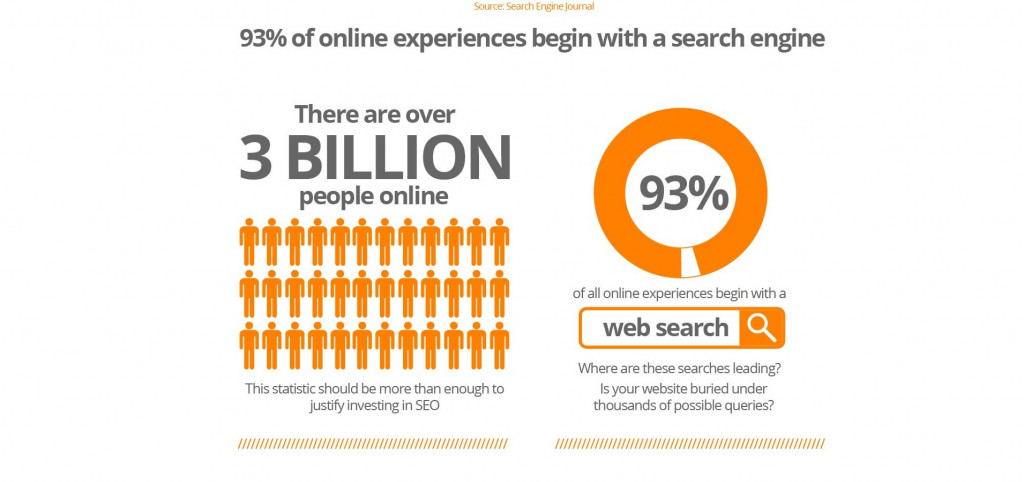
Here’s the reality: 93% of online encounters start with a search engine. When someone in your community searches “therapist near me” or “anxiety counselor in [your city],” your practice should show up. If it doesn’t, you’re losing potential clients to competitors who might not be any better than you—they’re just more visible.
The good news? SEO for therapists isn’t rocket science. It follows the same core principles as any other industry, with a few specific considerations for mental health professionals. This guide will show you exactly how to optimize your website for search engines and turn your site into a client-generating machine.
Why SEO Is Essential for Therapists and Mental Health Professionals
Let’s start with a simple truth: your ideal clients are looking for help right now. They’re typing questions into Google search at 2 AM when they can’t sleep. They’re comparing therapists during their lunch break. They’re researching mental health services while sitting in their car before heading into work.
If your website isn’t optimized to show up in those search results, someone else is getting that client.
SEO (search engine optimization) is all the actions and activities that help your therapy practice website appear at the top of search engine results. When someone searches for therapy services, Google’s job is to crawl every website on the internet and present the most relevant, trustworthy, and helpful page.
Your goal is to make sure that page is yours.
See Where Your Website Stands
The Benefits of SEO for Your Therapy Practice
Unlike paid ads that stop working the moment you stop paying, effective SEO builds long-term visibility. Here’s what a solid SEO strategy delivers:
- Sustainable lead generation: Organic traffic keeps flowing without ongoing ad spend
- Higher quality clients: People finding you through search are actively looking for help
- Improved credibility: Ranking high in search results builds trust before they even contact you
- Better ROI: SEO delivers results that compound over time, unlike ads that reset monthly
- Local visibility: Therapist SEO helps you dominate your local market, not compete nationally
The best part? You’re not trying to outspend mega-corporations. You’re using smart positioning and local SEO to capture clients in your community who are specifically looking for what you offer.
PRO TIP
Keyword Strategy for Therapists: Finding What Your Clients Actually Search
This is where most therapist SEO falls apart. People create beautiful websites, write compelling content, and then completely miss the mark on keywords because they’re using language their clients don’t actually use.
If you’ve ever wondered why your website isn’t showing up despite “looking professional,” this is probably why.
Understanding Search Intent for Mental Health Services
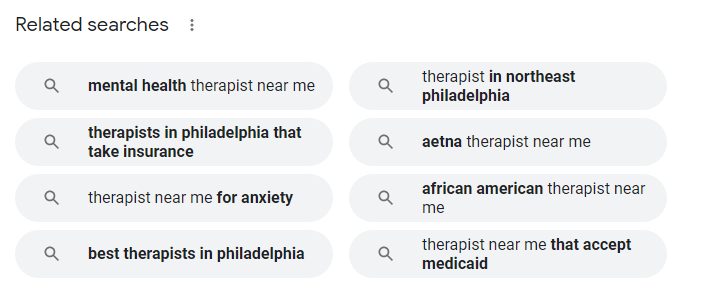
Your potential clients aren’t typing “psychotherapy clinical interventions” into Google. They’re searching things like:
- “Therapist near me”
- “How much does couples therapy cost”
- “Female therapist for anxiety in [city]”
- “Child counselor who takes insurance”
- “What happens in a therapy session”
- “Best mental health professional for depression”
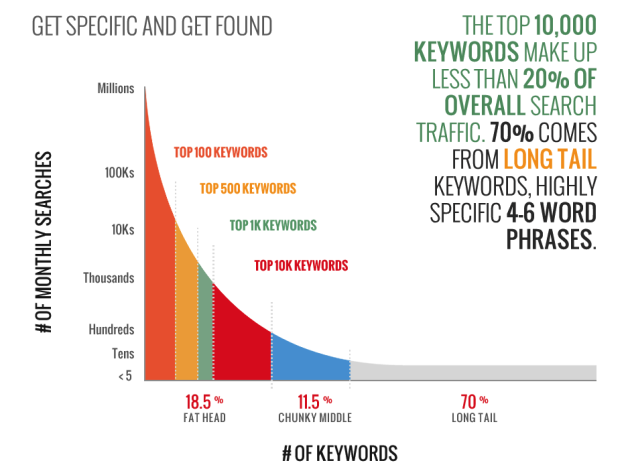
See the difference? These are long-tail keywords—specific phrases that reveal exactly what someone needs. And here’s the beautiful part: because they’re so specific, there’s way less competition for these search terms.
How to Find the Right Keywords for Your Practice
Effective keyword research is the foundation of any successful SEO campaign. Here’s how to identify which keywords will actually bring you clients:
1. Start With Your Services and Client Problems
Brainstorm target keywords related to:
- Your specialties (trauma therapy, EMDR, DBT, etc.)
- Client demographics (teen counselor, couples therapist)
- Conditions you treat (anxiety, depression, addiction)
- Your location (your city, nearby neighborhoods)
- Common questions you answer daily
PRO TIP
2. Use Local Keywords to Reduce Competition
Here’s a massive opportunity most therapists miss: adding your location to every relevant keyword dramatically reduces competition while attracting the exact people who can actually become clients.
Instead of trying to rank for “anxiety therapist” (impossible), you target “anxiety therapist in Portland” (totally doable).
| Generic Keyword | Local Keyword | Benefit |
|---|---|---|
| “Marriage counselor” | “Marriage counselor in Austin” | 85% less competition |
| “Child therapist” | “Child therapist near downtown Denver” | Higher conversion rate |
| “Trauma therapy” | “Trauma therapy in Brooklyn” | Actually reachable clients |
3. Research Your Competition
Look at other successful therapists’ websites in your area. What keywords are they ranking for? What blog posts do they have? What services do they highlight?
Type those keywords into Google. If your competitors show up on the first page of search results, their strategy is working. Learn from it.
PRO TIP
4. Use Free SEO Tools for Keyword Research
You don’t need expensive software to do this right. Free tools like Google Keyword Planner, Ubersuggest, and Answer the Public can show you:
- How many people search for specific keywords each month
- How competitive each keyword is
- Related keywords you hadn’t thought of
- Common questions people ask about mental health services
For example, if you’re a couples therapist in Chicago, you might discover that “premarital counseling Chicago” gets 500 searches per month with relatively low competition. That’s a perfect target keyword.
Understanding Long-Tail Keywords and Search Patterns
Here’s something crucial for therapists looking to improve their search engine rankings: long-tail keywords convert better than generic terms.
Someone searching “therapy” could be looking for physical therapy, occupational therapy, or researching the definition of the word. But someone searching “EMDR therapist for PTSD in Seattle who takes Aetna insurance”? That person is ready to book an appointment.
The more specific the search, the higher the intent—and the more likely that person becomes your client.
Creating an Effective SEO Content Strategy for Mental Health Websites
Keywords are meaningless if you don’t use them properly. This is where most therapy practice websites completely fall apart—they identify relevant keywords but have nowhere to actually use them.
Your website needs dedicated pages for:
- Each type of therapy you offer
- Each condition or client demographic you specialize in
- Common questions potential clients ask
- Your location and the areas you serve
Special Considerations: Your Money, Your Life (YMYL)
Google classifies mental health websites within what they call “Your Money, Your Life” (YMYL) content. This means your website is held to higher standards because the information you provide could significantly impact someone’s health, safety, or financial well-being.
To rank well, your site needs to demonstrate E-E-A-T: Experience, Expertise, Authoritativeness, and Trustworthiness.
Here’s what that looks like in practice:
| YMYL Requirement | How to Implement It |
|---|---|
| Clear expertise | Prominently display your credentials, licenses, and specializations |
| Author accountability | Show who wrote each article (your name, photo, bio) |
| Consistent purpose | Every page should reinforce your practice's mission and values |
| High reputation | Build quality backlinks and positive reviews |
| Updated content | Regularly refresh your blog posts and service pages |
| Contact information | Make it easy to find your phone, email, and address |
| Professional presentation | Clean design without intrusive pop-ups or ads |
PRO TIP
How to Create Engaging, SEO-Optimized Content
Your content needs to work for two audiences: search engines and actual humans. Here’s how to nail both:
Include Keywords Naturally Throughout Your Pages
- Use your primary keyword in the page title (H1)
- Include relevant keywords in headers (H2, H3)
- Distribute keywords naturally in body copy (don’t force it)
- Add keywords to your meta description
- Use keywords in image alt text
- Include keywords in your URL structure
Make Your Content Comprehensive and Helpful
- Aim for 1,500-2,500 words for main service pages
- Answer every question a potential client might have
- Use a conversational, empathetic tone
- Break up text with headers, bullet points, and images
- Include specific examples and scenarios
- Address common concerns directly
Organize Information for Easy Scanning
People don’t read websites—they scan them. Make your therapy practice content easy to digest:
- Use short paragraphs (2-3 sentences max)
- Add descriptive headers that tell the story
- Include bullet lists for key points
- Highlight important information
- Add a table of contents for longer articles
- Use visuals to break up text
Content Ideas That Attract Your Ideal Clients
Not sure what to write about? Here are blog post topics that work consistently well for therapist SEO:
- “What to Expect in Your First Therapy Session”
- “How to Know When It’s Time to See a Counselor”
- “Different Types of Therapy Explained”
- “How to Choose the Right Therapist for You”
- “[Specific Condition] Treatment Options in [Your City]”
- “Does Insurance Cover Therapy? A Complete Guide”
- “Online vs. In-Person Therapy: Which Is Right for You”
PRO TIP
Technical SEO and On-Page Optimization Essentials
Okay, this is where things get a bit more technical, but stick with me. Technical SEO is the behind-the-scenes work that helps search engines understand and rank your website properly.
The good news is that most of this is set-it-and-forget-it. You do it once, and it keeps working.
On-Page SEO Checklist for Therapists
These are the basic on-page SEO elements every page of your website needs:
Title Tags (H1)
- Include your primary keyword
- Keep it under 60 characters
- Make it compelling for humans, not just search engines
- Example: “Anxiety Therapy in Portland | Compassionate, Evidence-Based Treatment”
Meta Descriptions
- Summarize the page in 150-160 characters
- Include your target keyword naturally
- Add a call-to-action
- Example: “Struggling with anxiety? Our Portland therapists specialize in evidence-based treatment that actually works. Book a free consultation today.”
Header Tags (H2, H3, H4)
- Use headers to organize your content logically
- Include relevant keywords in some (not all) headers
- Make headers descriptive and helpful
- Think of headers as your content’s table of contents
URL Structure
- Keep URLs short and descriptive
- Include your target keyword
- Use hyphens to separate words
- Example: yourpractice.com/couples-therapy-denver
Image Optimization
- Use descriptive file names (anxiety-therapist-office.jpg, not IMG_1234.jpg)
- Add alt text that describes the image and includes keywords
- Compress images so they load quickly
- Use relevant, high-quality visuals
Internal Linking
- Link to other relevant pages on your site
- Use descriptive anchor text
- Create a logical site structure
- Help both users and search engines navigate your content
PRO TIP
Off-Page SEO: Building Authority and Trust
Off-page SEO refers to everything that happens outside your website that affects your rankings. The most important factor? Backlinks.
What Are Backlinks and Why Do They Matter?
A backlink is when another website links to yours. Search engines like Google see backlinks as votes of confidence. The more quality sites that link to you, the more trustworthy you appear.
But here’s the key: not all backlinks are created equal. One link from a reputable mental health organization is worth more than 100 links from random directories.
How to Build Quality Backlinks for Your Therapy Practice:
- Get listed in legitimate therapist directories (Psychology Today, GoodTherapy, TherapyDen)
- Ask colleagues to link to your website
- Write guest posts for mental health blogs
- Get featured in local news or podcasts
- Create content other sites want to link to
- Partner with local organizations

PRO TIP
Local SEO for Therapists: Dominating Your Geographic Area
Here’s where the magic happens for private practice therapists. While massive therapy networks are spending fortunes trying to rank nationally, you can completely own your local market with smart local SEO strategies.
Why Local Search Is Crucial for Therapists
Think about how people search for therapy services:
- “Therapist near me”
- “Couples counselor in Austin”
- “Child psychologist downtown Seattle”
- “Mental health services in my area”
Every single one of these searches has local intent. People aren’t looking for the best therapist in America—they’re looking for someone they can actually visit (or someone nearby who offers virtual sessions).
PRO TIP
Essential Local SEO Strategies for Your Practice
1. Claim and Optimize Your Google Business Profile
This is hands-down the most important local SEO step. Your Google Business Profile (formerly Google My Business) is what shows up in the Local Pack and on Google Maps.
Here’s how to optimize it:
- Claim your listing at business.google.com
- Fill out every single field completely
- Choose the right categories (Psychotherapist, Counselor, Mental Health Service)
- Add your exact business hours
- Upload high-quality photos of your office
- Include your services
- Add a detailed business description with keywords
- Post regular updates
- Respond to all reviews
2. Ensure NAP Consistency Everywhere
NAP stands for Name, Address, Phone Number. These three pieces of information need to be exactly the same everywhere they appear online—and I mean exactly.
If your website says “123 Main Street” but your directory listing says “123 Main St.,” that confuses Google search engines and hurts your local search rankings.
Check your NAP consistency on:
- Your website (every page)
- Google Business Profile
- Therapy directories
- Yelp
- Local business directories
- Any other site that mentions your practice
3. Get Listed in Local Directories
Beyond Google, make sure you’re listed in:
- Psychology Today
- GoodTherapy
- TherapyDen
- Better Business Bureau
- Yelp
- Healthgrades
- Local chamber of commerce
- City-specific business directories
4. Collect and Respond to Reviews
Reviews are one of the strongest local SEO signals. They help your search engine rankings AND convince potential clients to choose you.
Make it easy for happy clients to leave reviews by:
- Sending a follow-up email with a direct link to your Google review page
- Having a reviews page on your website with links to multiple platforms
- Simply asking at the end of successful treatment
Always respond to reviews (positive and negative) professionally and within a few days.
5. Create Location-Specific Content
If you serve multiple cities or neighborhoods, create dedicated pages for each location. Include:
- The specific area name in your headers and content
- Local landmarks and references
- Unique challenges people in that area face
- Directions and parking information
- Content that shows you understand the community
Local SEO Performance Tracking
Use free tools like Google Search Console and Google Analytics to monitor your local search performance:
- Which keywords are bringing traffic to your site
- How many people are finding you through Google Maps
- Which pages are performing best
- Where your website visitors are located
- How many people are clicking to call or get directions
PRO TIP
Common SEO Mistakes Therapists Make (And How to Avoid Them)
I’ve seen hundreds of therapy practice websites, and the same mistakes keep coming up. Here’s what NOT to do:
Look, I get it. You want your site to look professional and reflect your practice’s personality. That’s great. But if nobody can find it, what’s the point?
The fix: Build SEO into your website from day one. Every design decision should consider both aesthetics and search engine optimization.
On the flip side, some therapists hear “use keywords” and then use the same keyword 50 times on one page. That’s called keyword stuffing, and Google will actually penalize you for it.
The fix: Use keywords naturally. If it sounds weird when you read it out loud, rewrite it. Aim for keyword density around 1-2% (once or twice per 100 words).
More than 60% of searches happen on mobile devices. If your website looks terrible on phones, you’re losing more than half your potential clients.
The fix: Use a responsive website design that automatically adjusts to any screen size. Test your site on multiple devices before launching.
Every blog post is another opportunity to rank for relevant keywords and attract new clients. If you’re not blogging, you’re missing out on the easiest way to boost your SEO performance.
The fix: Aim for at least one quality blog post per month. Focus on answering real questions your clients ask.
Google penalizes duplicate content. If you copy text from another website (even another therapist in a different state), you’ll hurt your rankings.
The fix: Write original content. Use your own voice and expertise. That’s what sets you apart anyway.
You can’t improve what you don’t measure. If you’re not using SEO tools to track your performance, you have no idea what’s working.
The fix: Set up Google Analytics and Google Search Console (both free). Check them monthly to see your progress and identify areas for improvement.
Already Made Some of These Mistakes?
How Long Does SEO Take to Work for Therapists?
I’m going to be straight with you: SEO isn’t a quick fix. Unlike paid search advertising, where you can flip a switch and start getting calls, SEO for counselors takes time to build momentum.
Here’s a realistic timeline:
Months 1-3: You’re laying the foundation. You probably won’t see dramatic results yet, but search engines are starting to notice your site.
Months 4-6: You’ll start seeing some traction. Your website will begin appearing for some target keywords, and you’ll get occasional inquiries from organic search.
Months 7-12: This is where things accelerate. Your consistent SEO efforts compound, and you’ll see steady increases in traffic to your site and client inquiries.
Year 2+: Once you’re ranking well for your core keywords, you become very difficult to displace. Your SEO keeps working even if you slow down your efforts.
PRO TIP
Should You DIY Your SEO or Hire an SEO Company?
This is a fair question, especially for mental health professionals who are already stretched thin.
When to DIY Your Therapist SEO:
- You have time to learn and implement SEO strategies
- Your budget is extremely limited
- You enjoy writing and content creation
- You’re comfortable with basic technical tasks
- You want complete control over your online presence
When to Hire SEO Services:
- You’d rather focus on seeing clients than learning SEO
- You want faster results from proven strategies
- You need help with technical SEO that’s over your head
- You’re not seeing results from your current SEO efforts
- Your time is more valuable spent growing your practice
If you decide to hire professional help, look for an SEO company that:
- Has specific experience with therapist SEO and mental health websites
- Can show proven results for similar practices
- Explains their strategies in plain English
- Provides transparent reporting on your SEO performance
- Understands HIPAA compliance and privacy concerns
- Doesn’t promise overnight results (that’s a red flag)
Your Next Steps: Creating a Winning SEO Strategy
Alright, let’s bring this all together with a simple action plan. You don’t have to do everything at once—in fact, trying to do too much too fast usually leads to nothing getting done.
- Set up Google Analytics and Google Search Console
- Claim your Google Business Profile
- Use free SEO tools to research relevant keywords for your practice
- Create a list of 20-30 target keywords
- Audit your current website for basic on-page SEO
- Optimize your homepage and service pages with target keywords
- Write compelling meta descriptions for all pages
- Add alt text to all images
- Improve your internal linking structure
- Check NAP consistency across all online listings
- Write your first blog post targeting a specific keyword
- Create an FAQ page answering common questions
- Add testimonials (with permission) to build trust
- Start building a content calendar for regular blog posts
- Get listed in major therapy directories
- Ask happy clients for Google reviews
- Create location-specific pages if you serve multiple areas
- Reach out to local organizations for partnership opportunities
- Continue publishing helpful blog posts monthly
- Focus on earning quality backlinks from reputable sites
- Consider guest posting on mental health blogs
- Get involved in your local professional community
- Keep refining your SEO based on performance data
- Celebrate as your organic traffic grows!
Ready to Make SEO Work for Your Therapy Practice?
Look, here’s the bottom line: most therapists are amazing at what they do. You’ve put in years of education and training. You genuinely help people transform their lives. You’re not the problem.
The problem is that the people who need you most can’t find you.
And I’m not suggesting you go head-to-head with massive therapy networks that spend $50,000 a month on advertising. That’s a losing battle. Instead, use SEO to help you dominate your local market, attract clients who are specifically looking for your expertise, and build a sustainable practice that doesn’t depend on you constantly paying for ads.
The therapy practices that are crushing it right now aren’t necessarily the ones with the biggest marketing budgets—they’re the ones that committed to an SEO strategy and stuck with it long enough to see results.
Work With Experts Who Get Results
If you’re ready to turn your website into a client-generating machine but don’t want to become an SEO expert yourself, we can help.
At BCC Interactive, we specialize in SEO for therapists and mental health professionals. We know the unique challenges you face, the keywords your ideal clients actually use, and how to build local SEO strategies that work.
We’ll handle:
- Complete keyword research to identify the most valuable search terms for your practice
- Content creation that establishes your expertise and ranks in search engines
- Technical optimization to make sure search engines can properly crawl and index your site
- Local SEO implementation so you show up when people in your area are searching
- Ongoing monitoring to continuously improve your search engine rankings
Most importantly, we do this without locking you into long-term contracts. We use results-focused sprints that prove their value quickly, then we keep building on that success.

