
If you’re a small business owner, you already know the reality: being visible online isn’t optional anymore. It’s the difference between customers walking through your door and walking right past it.
Here’s something that should get your attention: 88% of consumers who conduct a local search on their smartphone visit or call a store within a day.
The interesting part? 78% of location-based mobile searches result in an offline purchase. That means more traffic to your website directly translates to more foot traffic through your door. Pretty straightforward math.
But here’s the catch: as more businesses figure this out, the competition in local search has gotten brutal. That’s where the right tools make all the difference. We’ve put together this guide to the best local SEO tools that will help you outrank your competition and own the local search landscape in your industry.
PRO TIP
Why Local SEO Tools Matter for Small Business Success
Local search engine optimization is the cornerstone of local visibility. Think of local SEO tools as your strategic weapons for understanding your local market, tracking your ranking, and identifying opportunities to outrank competitors before they even see you coming. These tools can help you significantly impact local search rankings without burning through your marketing budget on ads.
According to research presented at Google’s Secrets of Local Search conference, 46% of all Google searches have local intent. That’s billions of searches every single day from people actively looking for businesses like yours.
The best local SEO tools give you insight into what’s actually working (and what’s wasting your time), help you stay ahead of algorithm changes, and make it easier to manage your entire local presence from one dashboard.
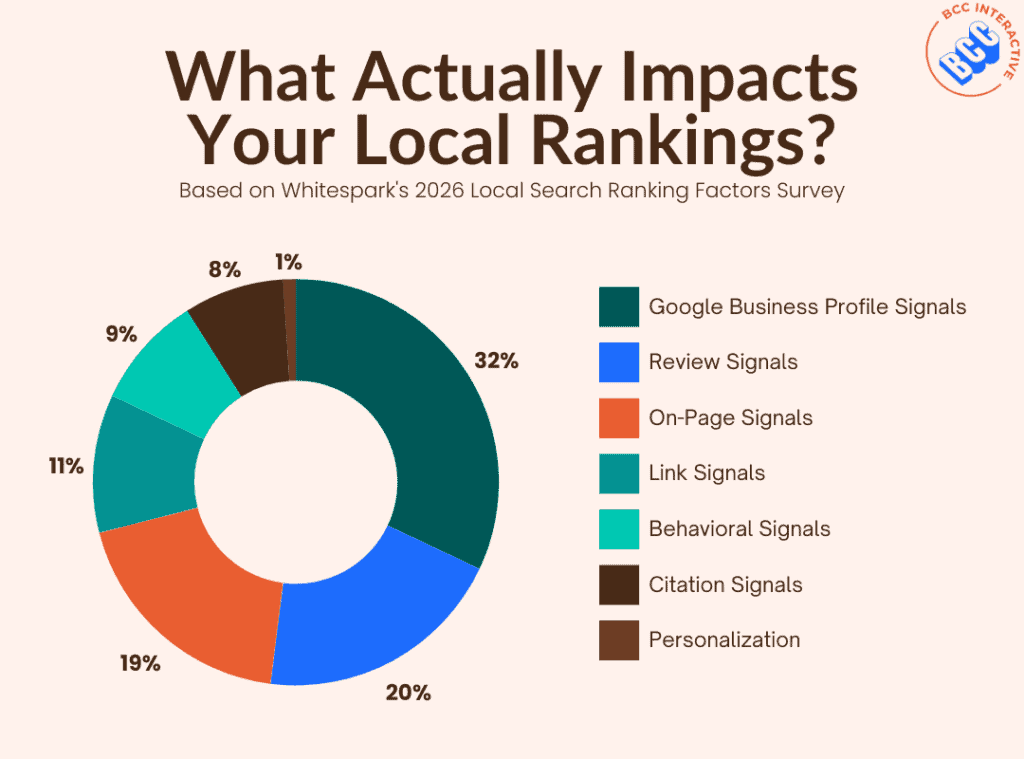
The Essential Local SEO Tools Every Small Business Needs
1. Google Business Profile (Formerly Google My Business)
Let’s start with the obvious one that too many businesses still ignore. Almost half of searches on Google are local searches. Read that again.
Google Business Profile is your direct line to local search results and Google Maps visibility. This free tool lets you manage how your business appears across Google search and Maps, respond to customer reviews, monitor website traffic, analyze your analytics, and see requests for driving directions to your store.
What Makes It Essential:
- Controls your appearance in local packs (those top 3 results with the map)
- Directly influences local search rankings
- Provides critical insight into how customers find you
- Zero cost, maximum impact
How to Optimize It:
- Upload high-quality images of your location, products, and team
- Keep your business hours, phone number, and address current
- Respond to every review (yes, every single one)
- Post regular updates to stay active
- Use all available attributes and categories
Getting Started: Visit Google Business Profile to register and fill out your information completely. The more detailed and accurate your profile, the better your ranking potential.
PRO TIP
2. SEMrush: The All-in-One Local SEO Toolkit
SEMrush is one of those tools that does everything, and it does it well (in our opinion). For local search, it’s particularly valuable for keyword research, competitor analysis, and tracking your local rankings over time.
Key Features for Local:
- Local keyword tracking by ZIP code
- Listing Management feature to monitor all your directory listings
- Site audit tools to identify SEO issues
- Competitor keyword analysis
- Backlinks monitoring
- Performance tracking dashboard
How It Helps: SEMrush lets you see exactly what keywords your competitors are ranking for in local search results, giving you a roadmap for your own local SEO strategies. The Listing Management tool showcases all your directory listings so you can ensure your business name, phone number, and address are consistent across all listings (more on why this matters in a minute).
PRO TIP
3. Ahrefs: The Powerhouse for Competitive Intelligence
Ahrefs is VERY similar to SEMRush, so it’s a matter of personal preference which you choose to use. This tool also excels at backlink analysis and keyword research, but where it stands out is its competitive analysis tools, which help businesses refine their SEO strategies.
What Ahrefs Brings to Local SEO:
- Comprehensive backlink profile analysis
- Competitor keyword tracking
- Local keyword suggestions
- Content gap analysis
- Site audit capabilities
- Rank tracking tools for monitoring your position in search results
The Real Value: Ahrefs helps you identify where your competitors are getting their authority from. You can see their backlinks, understand their content strategy, and identify opportunities to outrank them by targeting the same high-value local keywords with better content.
PRO TIP
4. BrightLocal: Purpose-Built for Local Search
BrightLocal is specifically designed for local SEO, making it one of the most focused tools for local businesses. Unlike general SEO tools trying to do everything, BrightLocal’s laser focus on local gives you features you won’t find elsewhere.
Core Features:
- Local rank tracker with hyper-local rank tracking by neighborhood
- Citation building and management (both manual and aggregated)
- Review monitoring across multiple platforms
- Local search audit tools
- Competitive analysis for the local market
- White-label reporting (great for agencies)
Why It Stands Out: BrightLocal’s citation management is particularly strong. Citations (mentions of your business name, address, and phone number across the web) significantly impact local search rankings. BrightLocal helps you find citation opportunities, build new citations, and monitor existing ones for accuracy.
Getting Started: BrightLocal offers a 14-day free trial. Use it to run a complete citation audit and see where your business information is inconsistent or missing.
PRO TIP
5. Moz Local: Set It and (Almost) Forget It
Created by SEO giant Moz, Moz Local specializes in distributing and managing your business listings across the web. If you don’t have time to manually manage dozens of local directories, this is your solution.
What Moz Local Does:
- Verifies your business on Google, Facebook, and major platforms
- Completes and distributes your business listings automatically
- Monitors for duplicate or incorrect listings
- Manages review monitoring
- Provides listing visibility insight
The Time-Saving Factor: Moz Local doesn’t just help you claim listings—it actively distributes your information across the web to increase visibility and helps you understand local search patterns. The paid version is worth it if you’re serious about local dominance, but they also offer a free tool to check your current local listing status.
PRO TIP
6. Local Falcon: The Visualization Game-Changer
Local Falcon takes rank tracking to another level by showing you exactly where you rank on Google Maps from different locations in your area. This hyper-local rank tracking reveals how your visibility changes street by street.
Unique Features:
- Visual heat map of your local rankings
- Track rankings from multiple locations simultaneously
- See your local pack visibility across your entire service area
- Monitor ranking changes over time
- Competitor position tracking
Why It Matters: You might rank #1 for “plumber” from your office location, but what about from neighborhoods 2 miles away, where your customers actually are? Local Falcon shows you the complete picture of your visibility in local search results across your entire market.
PRO TIP
7. Google Analytics: Your Foundation for Understanding Performance
Yes, we’re talking about the original Google Analytics. It’s free, it’s powerful, and most businesses barely scratch the surface of what it can do for local SEO success.
Local SEO Applications:
- Track where your website traffic comes from geographically
- See which local keywords are driving traffic
- Monitor how local visitors behave on your site
- Measure conversion from local search
- Understand user demographics and locations
How to Use It: Navigate to Acquisition > Campaigns to see traffic from your Google Business Profile. Check Audience > Geo > Location to understand where your visitors are coming from. Use this insight to refine your local targeting and content strategy.
PRO TIP
8. Google Search Console: Your Direct Line to Google
Google Search Console is your behind-the-scenes look at how Google sees your website. For local search, it’s invaluable for understanding which local keywords you’re ranking for and identifying technical SEO issues that might be holding you back.
Key Local Features:
- See exact search queries bringing you traffic
- Monitor your position in search engine results
- Identify technical issues affecting search visibility
- Submit local pages for indexing
- Track mobile usability (critical for local)
PRO TIP
9. Whitespark: The Local SEO Specialist's Choice
Whitespark offers a suite of tools designed specifically for local businesses and the agencies that serve them. It’s particularly strong for citation building and local rank tracking.
Core Tools:
- Local Citation Finder to discover where your competitors have citations
- Local Rank Tracker for monitoring positions in local packs and organic results
- Reputation Builder for review management
- Link Prospector for finding local link opportunities
The Strategic Advantage: Whitespark’s Citation Finder is like having a competitive intelligence agent. It shows you every local directory where your competitors are listed, giving you a roadmap for your own citation-building strategy.
10. Screaming Frog SEO Spider: The Technical Audit Powerhouse
Screaming Frog SEO Spider is essential for finding technical SEO issues that might be killing your local rankings. It crawls your website like a search engine would, identifying problems you need to fix.
What It Finds:
- Broken links and redirect chains
- Missing or duplicate title tags and meta descriptions
- Slow-loading pages
- Mobile usability issues
- Structured data problems (critical for local)
PRO TIP
Free Local SEO Tools Worth Using
Not every tool needs to drain your budget. Here are some free local SEO tools that punch above their weight:
Google Keyword Planner
Part of your Google Ads account (free to create), Keyword Planner helps with keyword research by showing local search volume and competition for specific keywords in specific locations.
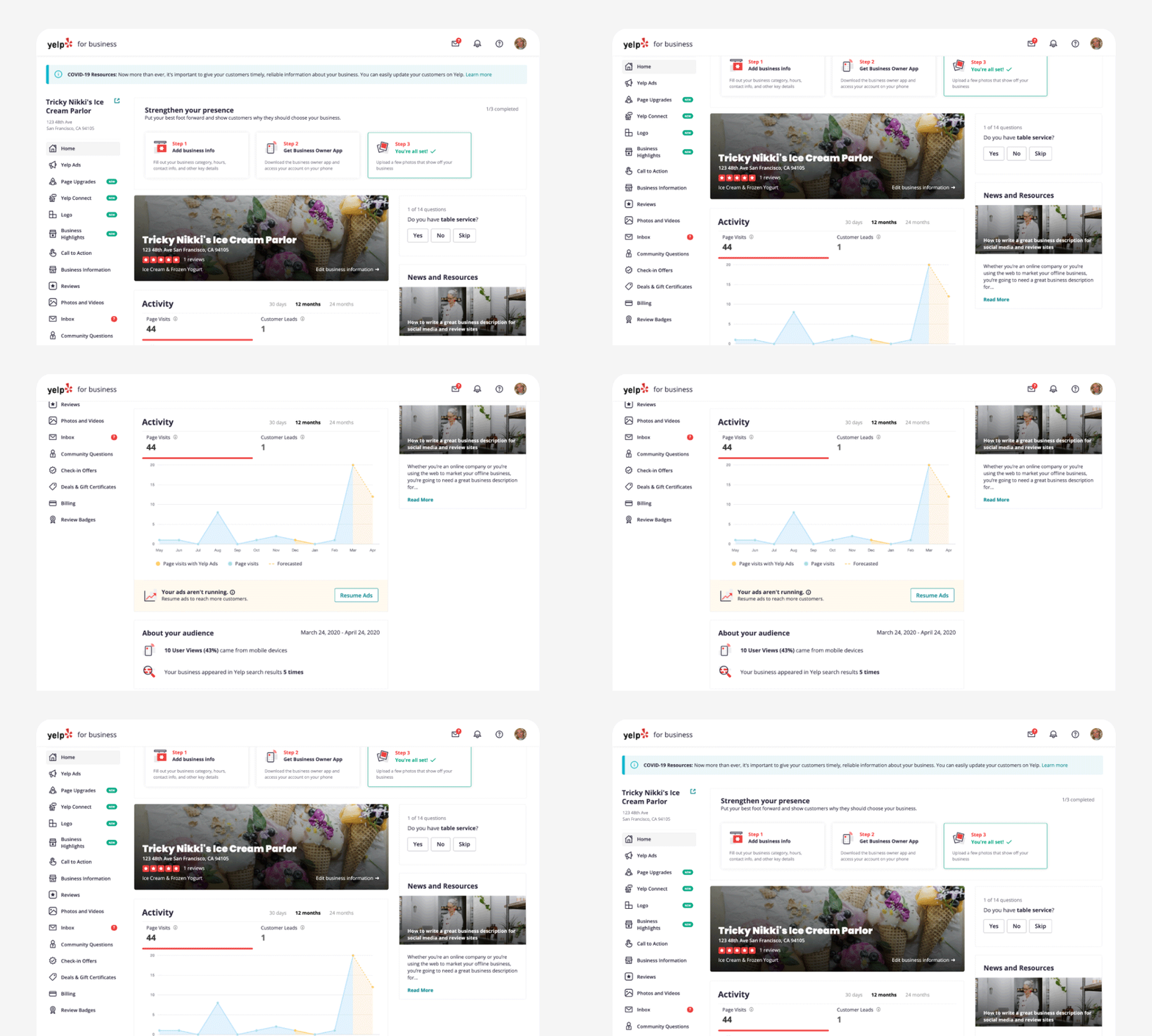
Yelp for Business
Yelp is still one of the top sites for local business information. Claim your listing, optimize it completely, and respond to every review. The free version gives you solid insight into customer behavior and search patterns.
YP for Business
The digital version of Yellow Pages gives you access to 60 million users monthly with a free listing. The paid version distributes your listing across multiple apps and networks, but the free version is a solid citation source.
How to Choose the Right Tools for Your Business
Look, you don’t need every tool on this list. Here’s how to prioritize:
| Level | Tools | Cost | Why These Matter | When to Use |
|---|---|---|---|---|
| Essential (Start Here) | • Google Business Profile • Google Analytics • Google Search Console • Yelp listing | FREE | These are your foundation. Without these, you’re invisible in local search. They give you control over your listings, show you where traffic comes from, and help Google understand your business. | Start Day 1. If you haven’t claimed these, you’re leaving money on the table. These should be set up before you spend a dime on anything else. |
| Next Level (After You Master the Basics) | • One comprehensive tool: – SEMrush – Ahrefs – BrightLocal • Citation management: – Moz Local – BrightLocal | $99-299/month | Once your foundation is solid, these tools help you scale. They automate what you’d spend hours doing manually: tracking rankings, building citations, monitoring competitors, and finding keyword opportunities. | After 3-6 months of using the free tools consistently. When you’re ready to get serious about outranking competitors and need data to guide your strategy. |
| Advanced (For Competitive Markets) | • Specialized rank tracking: – Local Falcon – Whitespark • Technical audit: – Screaming Frog • Review management: – BrightLocal – Whitespark | $50-500+/month | These are for businesses in hyper-competitive markets or those managing multiple locations. They provide granular insights like block-by-block ranking visibility and deep technical SEO analysis. | When you’re already dominating and need that extra edge, or when you’re managing 3+ locations and need sophisticated tracking across all of them. |
PRO TIP
Quick Decision Framework:
If you’re just starting: Essential tier only. Get your free tools working first.
If you’re seeing some traction but want more: Add ONE comprehensive tool (BrightLocal if you’re local-focused, SEMrush if you want all-around SEO capabilities).
If you’re in a brutal competitive market: Essential + Next Level + specialized rank tracking to see exactly where you stand block-by-block.
If you’re managing multiple locations: BrightLocal + Local Falcon for managing and tracking across all your locations efficiently.
Building Your Local SEO Strategy with the Right System
Having tools isn’t enough—you need a system. Here’s a framework for using these tools effectively:
Monthly Tasks:
- Review ranking changes (Local Falcon, BrightLocal, or SEMrush)
- Check and respond to new reviews
- Update Google Business Profile with posts
- Monitor analytics for traffic patterns and opportunities
- Run a quick site audit to catch new issues
Quarterly Tasks:
- Comprehensive citation audit
- Competitor analysis (see what they’re doing differently)
- Content gap analysis (what local keywords are you missing?)
- Technical SEO audit
- Strategy refinement based on performance data
Ongoing:
- Monitor Google Search Console for new opportunities
- Respond to reviews within 24 hours
- Keep business information current across all platforms
- Create new local content regularly
PRO TIP
When DIY Local SEO Doesn't Make Sense
Here’s the reality: these tools are powerful, but they require time, expertise, and consistent execution. If you’re a small business owner already wearing fifteen hats, adding “local SEO expert” to the list might not be the smartest move.
You’re amazing at running your business. That’s your zone of genius. Marketing might not be—and that’s completely fine.
Signs You Need Professional Help:
- You don’t have 5-10 hours per week for local SEO
- You’ve tried DIY optimization for 6+ months without results
- Your competitors are crushing you in local search
- You’re in a highly competitive local market
- You need results faster than DIY allows
- The technical aspects feel overwhelming
The Smart Business Decision: Just like you wouldn’t expect your customers to DIY what you do professionally, trying to DIY your entire local SEO strategy while running a business is often a losing battle. The opportunity cost alone makes it inefficient.
That’s where we come in.
How We Approach Local SEO
We use all of these tools (and then some) to build local SEO strategies that actually generate leads. But tools are just tools. What matters is knowing how to use them strategically to achieve your specific goals.
Our Process:
- Local Market Analysis: We use tools like SEMrush and Ahrefs to understand your competitive landscape and find opportunities.
- Technical Foundation: We audit your site using Google Search Console and Screaming Frog to fix issues that are holding you back.
- Citation Building: We use BrightLocal and Moz Local to build and manage citations that boost your local authority.
- Content Strategy: We create local content targeting the keywords that drive actual customers to your business.
- Performance Tracking: We monitor your ranking, traffic, and conversions to prove ROI and continuously refine our approach.
The Difference: We’re not just running tools and sending you reports. We’re using these insights to build a local presence that generates leads on autopilot. That’s the point of all this—more customers through your door, not more metrics on a dashboard.
Take Action: Your Next Steps
If you’re ready to dominate local search in your market, here’s what to do:
This Week:
- Claim and optimize your Google Business Profile (if you haven’t already)
- Set up Google Analytics and Google Search Console
- Claim your Yelp and Bing Places listings
- Run a free citation check with Moz Local
This Month:
- Evaluate one paid tool (SEMrush, Ahrefs, or BrightLocal)
- Conduct local keyword research
- Build 10-15 high-quality citations
- Create your first piece of local content
Or Skip the DIY Headache: Partner with a team that knows these tools inside and out and has a track record of getting results. We offer results-oriented sprints that focus on specific, measurable goals—not vague promises and long-term contracts you can’t escape.
Ready to Turn Your Website Into a Local Lead Generation Machine?
Look, you could spend the next six months learning these tools, testing strategies, and hoping for results. Or you could partner with a team that’s already figured it out and focus on what you do best—running your business.
We bring Fortune 500-level marketing expertise to small businesses without the Fortune 500 price tag. No long-term contracts, no jargon-filled reports you don’t understand, just transparent collaboration focused on generating more leads for your business.
Schedule a Free Strategy Call to see how we can help you dominate local search in your market. We’ll audit your current local presence, show you exactly what’s holding you back, and map out a clear path to more customers walking through your door.
Because at the end of the day, that’s what this is all about: more visibility, more leads, more revenue. The right tools help—but having a team that knows how to use them strategically? That’s the real game-changer.
Final Thoughts
The best local SEO tools aren’t the most expensive or the most complicated—they’re the ones you’ll actually use consistently. Whether you choose to DIY with this toolkit or partner with experts like us, what matters is taking action.
Your competitors are investing in local SEO right now. The businesses dominating local search in your industry aren’t waiting for the “perfect” moment or the “perfect” strategy. They’re out there building citations, optimizing content, and capturing customers who should be finding you.
The question isn’t whether you need local SEO. The question is: how quickly do you want to start seeing results?
Ready to own your local market? Let’s talk.

