
Search is changing, and if you’re only paying attention to Google search and rankings, you’re missing half the picture. AI is now answering questions directly with no clicking, no scrolling, just an answer. That shift has a name: generative engine optimization, or GEO.
Not sure if your brand even shows up in AI answers?
What Is GEO, Exactly?
GEO is the practice of optimizing your content so generative engines (ChatGPT, Perplexity, Google’s AI Overviews, Gemini) can find it, understand it, and use it to answer someone’s question. Traditional SEO gets your site ranked in a list of blue links on the SERP. GEO gets you surfaced inside the answer itself.
The difference isn’t that one replaces the other; they’re solving for different outputs. SEO puts you in front of people who are doing their own research. GEO gets you named or linked when an AI does that research for them.
And that second scenario is happening constantly. AI Overviews now sit at the top of search results for a huge share of queries, meaning your #1 ranking might get buried under an AI-generated answer before anyone scrolls far enough to see it.
Why This Matters More Than You Think
We’ve said this before, and we’ll keep saying it: paid ads are a great short-term catalyst. They get you leads now. But SEO is the long-term engine that keeps working after you stop paying for clicks. GEO is the next layer on top of that engine, and here’s the part that matters most: good SEO is the foundation of GEO. You can’t optimize for AI engines if the foundation (site structure, content quality, authority, backlinks) isn’t already solid. GEO doesn’t replace your SEO work. It builds on it.
If your SEO foundation is shaky, no amount of GEO tactics will fix that. We see this constantly with new clients: they want their brand showing up in ChatGPT answers, but their site doesn’t have the technical structure or content depth to earn that trust in the first place.
How Generative Engines Actually Work
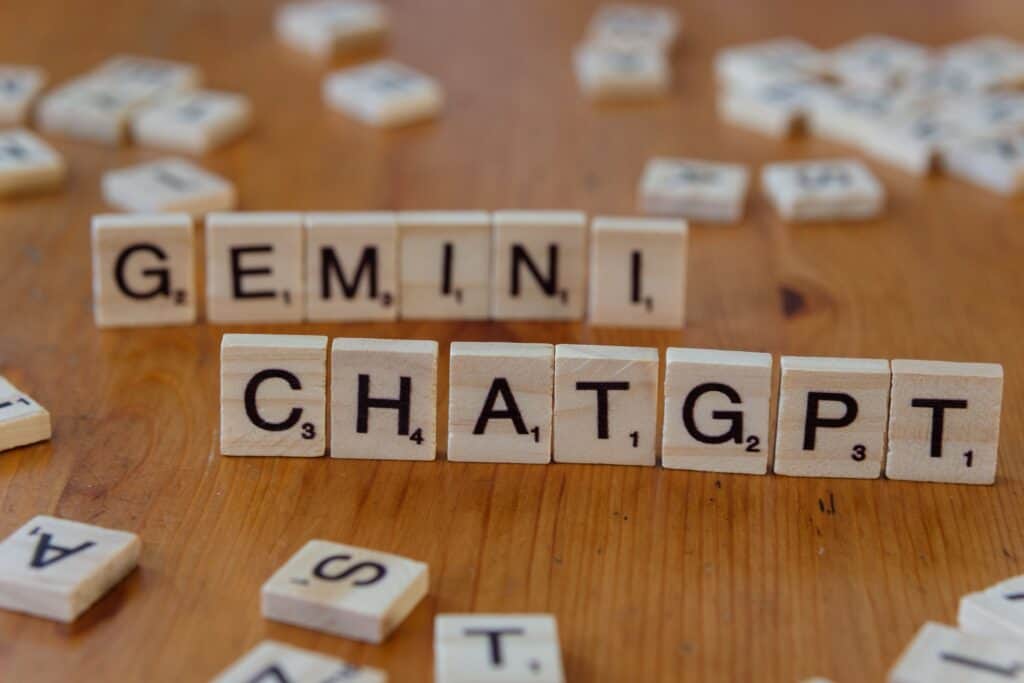
Generative engines like ChatGPT, Perplexity, and Google’s AI systems use large language models trained on enormous amounts of text, then layer in real-time retrieval to pull current information when they answer a query. They’re not just repeating what they memorized; they’re actively searching, synthesizing, and generating a response in natural language.
A lot of the GEO advice circulating right now is based on assumptions rather than testing. Schema is the clearest example: people will tell you schema markup drives AI platform visibility. It doesn’t. Schema helps search engines understand what’s on a page; it’s table stakes, and you should have it, but it’s not one of the big levers that gets you cited.
llms.txt files get the same treatment. It’s become a popular thing to implement, but nobody has actually shown it moves the needle on AI visibility either. If a tactic sounds like a magic file you drop into your root directory and forget about, be skeptical.
PRO TIP
It's Not Just Your Website
AI systems aren’t only reading your website when they form an opinion of your brand — they’re pulling from third-party sources to check what your site says about you against what everyone else is saying. That includes Reddit, YouTube, LinkedIn, and reviews.
- Reddit: AI treats Reddit threads as a major signal, especially for comparison and “is this company legit” type queries
- YouTube: video content and transcripts get indexed and referenced
- LinkedIn: company pages and posts factor into how AI understands who you are
- Reviews: this one’s big, and it’s largely out of your direct control. How people talk about you on review platforms influences AI answers just as much as (sometimes more than) your own website content
To be honest, showing up on Reddit doesn’t guarantee AI visibility. What it does is shape sentiment: if people are saying good or bad things about you on Reddit, that colors how AI characterizes your brand, whether or not that specific thread ever gets cited directly.
The same logic applies across the board. If your external footprint is outdated or wrong, the AI will repeat it regardless of how good your own website is. Think of AI as a parrot: it repeats what it hears most often, not necessarily what’s true.
Mentions vs. Citations (They're Not the Same Thing)
This distinction gets glossed over constantly, and it matters. A mention is AI naming your brand in an answer. A citation is AI linking to your source. You can get one without the other, and neither guarantees the outcome you actually want.
Being mentioned doesn’t automatically drive traffic; if the AI names you but links to a different source, or doesn’t link at all, that’s friction between the answer and your website. Being cited doesn’t automatically mean much either. You could be the 17th citation buried in an answer, which is the AI-search equivalent of ranking on page six of Google. Technically present, practically invisible.
When we run an AI Visibility Analysis for a client, we’re checking for both: does the AI recognize the brand, is the information accurate and current, and, where we can, whether it’s naming you or actually linking to you.
One More Thing: Different AI Platforms Don't Behave the Same Way
Showing up in Google’s AI Overviews doesn’t mean you show up in ChatGPT. Ranking well in Perplexity doesn’t transfer to Gemini. Each system pulls from different sources and weighs them differently, which is exactly why we test brand visibility separately across ChatGPT, Gemini, and Perplexity rather than treating “AI search” as a single target.
SEO to GEO KPI Measurement
Most of the KPIs you already track for SEO have a generative AI equivalent — you don’t need to invent an entirely new measurement framework:
| SEO KPI | GEO Equivalent |
|---|---|
| Share of voice | Brand mentions in AI responses relative to competitors |
| Keyword ranking | Frequency, accuracy, and positioning of brand mentions/citations |
| Organic traffic | Referral traffic from LLMs, tracked in GA4 |
| Indexed pages | Pages actually crawled and cited by LLMs |
| Backlinks & referring domains | Citation sources — and whether you’re missing from them |
| Goal completions | Leads that mention ChatGPT or an AI assistant in “how did you find us” |
Top 5 Practical GEO Optimization Strategies
This isn’t a list of hacks. It’s a practical guide to what actually moves the needle, based on how these systems really work, not on assumptions passed around as SEO best practices.
1. Write for the query, not the keyword.
People don’t type keywords into ChatGPT; they ask full questions in a conversational tone. Instead of targeting “best CRM software,” think about how someone would actually ask it: “What’s the best CRM for a 10-person sales team?” This is the core idea behind question-based keywords: you’re optimizing for how someone actually talks, not how they used to type into traditional search engines.
2. Build content around entities, not just topics.
AI models connect the dots between your brand, your services, and your industry, just as generative models connect concepts across the web. The more clearly you define who you are across your site, the easier it is for AI to represent you accurately. This matters for search rankings in traditional search engines, too; entity clarity isn’t a GEO-only concept; it’s just more visible now that AI-driven search engines rely on it directly to construct answers.
3. Don’t ignore your off-site footprint.
Since AI pulls from Reddit, YouTube, LinkedIn, and reviews to validate your brand, get intentional about those spaces. Answer questions authentically on Reddit where relevant, keep your LinkedIn active, and don’t treat reviews as an afterthought; they’re feeding the AI knowledge base whether you’re paying attention or not.
4. Diversify your content types.
Generative models trained with natural language processing don’t just parse text. Images and videos shape how AI understands and represents your brand; a product demo on YouTube or a clearly labeled image can factor into the same answer as your blog post. Creating content across formats, not just long-form articles, gives AI more ways to find and use what you’re putting out.
5. Monitor how AI systems already talk about you.
This is where many businesses get blindsided. We run something called an AI Visibility Analysis for clients — we ask ChatGPT, Gemini, and Perplexity a series of questions about their brand and evaluate the responses. We’re looking at three things: does the AI recognize the brand at all, is the info accurate, and is it up to date?
We’ve found real gaps doing this. One client’s brand was described by ChatGPT as doing something completely different from their actual business — outdated info that nobody had bothered to correct anywhere, on-site or off. That’s not a problem you fix by writing more blog posts. It requires feeding AI the right signals across your whole footprint: clear “about” content, authoritative citations, and a cleaned-up external presence.
None of this replaces a solid user experience or your existing digital strategy; it sits on top of it. Google Search Central has said plainly that this new search reality, where AI-driven search engines and traditional search engines coexist, isn’t going away. As search evolves, GEO ensures your content keeps showing up, regardless of which system someone’s using to find it. Future-proofing your visibility means building for both at once, not picking one.
Struggling to know what AI actually says about your brand right now?
Common GEO Mistakes to Avoid
- Treating GEO as separate from SEO instead of an extension of it
- Assuming schema (or an llms.txt file) is a major visibility driver instead of baseline hygiene
- Ignoring your off-site presence — Reddit, YouTube, LinkedIn, reviews
- Confusing being mentioned with being cited, and being cited with being cited well
- Assuming visibility in one AI platform transfers to the others
- Chasing every prompt variation instead of building topical depth
- Not checking what AI is already saying about your brand today
Where This Is Headed
The line between traditional search and AI-driven search keeps blurring, and Google has been clear that AI Overviews aren’t going anywhere. The businesses treating GEO as an extension of their existing SEO work, not a replacement for it, are the ones who’ll have a real advantage rather than scrambling later.
This isn’t about abandoning SEO. It’s about layering AI visibility, on-site and off, on top of a strategy that’s already working. Ads bring you traffic today. SEO builds the machine that keeps working long after the ad spend stops. GEO ensures that what’s being said about you elsewhere gets picked up by the systems that shape how people find answers now.
Ready to Show Up in AI Answers, Not Just Search Results?
FAQs
SEO optimizes for ranking in traditional search results. GEO optimizes for being named or linked in AI-generated answers. They work together — GEO depends on solid SEO fundamentals to succeed.
It helps search engines understand your pages, which is necessary groundwork, but no one has shown it’s a real driver of AI citations. Same goes for llms.txt files.
No. A mention is AI naming your brand. A citation is AI linking to your source. You want both, but neither guarantees traffic or visibility on its own.
No. Each AI platform pulls from different sources and ranks them differently. That’s why we test visibility across ChatGPT, Gemini, and Perplexity individually rather than treating AI search as one target.
Ask ChatGPT, Gemini, and Perplexity directly about your business and evaluate the answers for accuracy and currency. That’s exactly what our AI Visibility Analysis service is built to do.

