


Your customers are searching for what you sell right now, and Google is answering with a map and three businesses. If your profile isn’t one of them, you don’t exist to that searcher.
That map block is the local pack (the three businesses with a map that Google shows for most searches with local intent). Google fills it from Business Profiles, not websites, so your visibility in local search results comes down to the profile. The profile is the job.
One naming note before the list. Google renamed Google My Business to Google Business Profile in November 2021, and it retired the standalone app the following year. People still search for “Google My Business,” so that name is in the title. Everywhere else, it’s Google Business Profile, because that’s what you’ll see when you log in.
This Google Business Profile optimization checklist runs in the order a local business owner would actually work through it, from claiming the profile to the monthly routine. Business owners who finished setup years ago can skip to the audit checklist at the end. Every item was checked against Google’s own help pages, because several features changed between 2024 and 2026 and most checklists online still describe the old ones.

Key Takeaways
Verification comes first. Nothing else on this list matters until Google confirms you own the business, and Google decides which of the six verification methods you get.
Your primary category is the biggest lever. Whitespark's 2026 Local Search Ranking Factors survey put primary category at the top of the local pack list, ahead of distance.
Complete profiles rank better. Google's own guidance says businesses with complete and accurate information are more likely to show up in local search results.
Reviews drive both ranking and clicks. Google says more reviews and positive ratings can help your local ranking, and BrightLocal's 2026 survey found 97% of consumers read reviews for local businesses.
Chat is gone, booking stayed. Google shut off Business Profile chat and call history on July 31, 2024; today's "chat" is a WhatsApp or text link, and booking links still work.
Posts are a habit, not a setup step. Google archives posts older than six months unless they carry a date range, so a profile that posted once in 2024 looks empty today.
About a third of this list is ongoing. The summary table at the end splits every item into "done once" and "ongoing" so you know what to put on the calendar.
What A Google Business Profile Is And Why It Decides Who Shows Up In Local Searches
A Google Business Profile (the old GMB listing) is the free business listing that represents your business on Google Search and Maps: your name, address, phone, hours, category, photos, reviews, posts and the buttons potential customers use to call, get directions or book.
It’s also the raw material for the local pack. Google says it ranks Business Profiles on three things: relevance (how well the profile matches the search), distance (how far the business is from the searcher) and prominence (how well known the business is). You can’t change distance. Everything else on this page moves relevance and prominence, which is what an optimized profile helps with.
Google also says plainly that there’s no way to request or pay for a better local ranking. That’s why a checklist works here. The profile is the input.
If you’re new to all of this, start with what local SEO is (search engine optimization for a business that serves a specific area) and come back. If you’ve already done the basics and want the reasoning behind each item, our deeper optimization guide covers it.
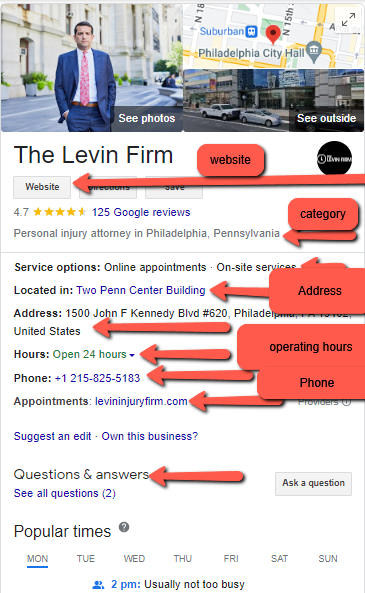
How To Get Your Business On Google: Claim And Verify Your Profile
This is the step most “how to list my business on Google” searches are really asking about. It takes about ten minutes to set up and up to a couple of weeks to verify.
Check whether a profile already exists
- [ ] Search Google for your business name plus your city.
- [ ] Look for a profile panel on the right (desktop) or at the top (mobile). Anyone can add Business Profiles to Maps, so one may exist even if you never created it.
- [ ] If you see “Own this business?”, click it and follow the prompts to claim it. If someone else already manages it, Google will route you through a request-access process and notify the current owner.

Create a new profile if none exists
- [ ] Go to google.com/business and sign in with the Google account you want to own the profile. Use a company account, not an employee’s personal Gmail or your agency’s login. Ownership is painful to recover when that person leaves.
- [ ] Enter your business name exactly as it appears on your signage, website and legal documents.
- [ ] Choose whether you serve customers at a physical address, at their location, or both. Google’s guidelines say you qualify if your business has a physical location customers can visit or travels to customers where they are. P.O. boxes and remote mailboxes don’t count.
- [ ] Add your address (or hide it and set service areas if customers never come to you), phone number and website.
Verify the profile
Google decides which verification methods you’re offered based on your business type, public information, region and hours. Its help page says the methods are “automatically determined by Google and can’t be changed.” The current options:
- [ ] Video recording. Google recommends this one when it’s available. You record a short walkthrough showing your location, signage and proof you run the business.
- [ ] Live video call. Same idea, on a call with a Google rep. Only available during your listed business hours.
- [ ] Phone or text. You receive a code by call or SMS. Google notes that phone systems with menus (IVR) won’t receive it.
- [ ] Email. A code or button arrives at the address shown on the verification screen.
- [ ] Postcard. A mailed code. Google says most arrive within 14 days and the code expires after 30 days. Requesting a new one cancels the one in the mail, so don’t double-request.
- [ ] Instant. In some cases Google verifies on the spot, for example when your website is already verified in Google Search Console.
After you submit, Google says verification reviews take up to five business days, occasionally longer.
Add the right people
- [ ] Add managers under Business Profile settings. Owners can add and remove users and manage everything; managers can edit the profile and post but can’t delete it or control access.
- [ ] Keep the primary owner as a company account. Give your agency or marketing contractor manager access, not ownership.
Core Business Information Checklist
Google’s local ranking help page says Business Profiles with complete and accurate information are more likely to show up in local results. This section is where most Business Profiles are still missing something, so optimize it before anything below.
Business name
- [ ] Use your real-world name. Google’s guidelines say the name “should reflect your business’s real-world name” and that including unnecessary information “isn’t permitted.” That means no taglines, store codes, phone numbers, hours or location details that aren’t part of the actual name.
- [ ] Match it to your signage, website and other listings.

Yes, keywords in the business name still correlate with ranking. Whitespark's 2026 survey ranks "Keywords in GBP Business Title" third overall for the local pack. We still won't add them unless they're genuinely part of your name. Google can suspend a profile over it, competitors report it, and a suspended profile ranks nowhere. If you want the keyword in play, put it in your primary category and services instead.
Address and service area
- [ ] Enter your actual street address, formatted the way the post office writes it.
- [ ] If customers don’t visit you (plumbers, cleaners, mobile services), hide the address. Google’s guidelines say service-area businesses “should hide your business address from customers.”
- [ ] Set service areas by city, county or zip. Keep them to where you’ll actually travel.
- [ ] Don’t put keywords or URLs in address lines. Google calls that out specifically.
- [ ] Check the map pin lands on your front door, not the parking lot or the wrong building. Whitespark’s 2026 survey lists proper pin placement in its top ten local pack factors.
Phone and website
- [ ] Use a local number that someone answers. Google counts calls from the profile, so a dead line costs you leads and data.
- [ ] Link your homepage for a single location. For multi-location profiles, each profile links to its own location page.
Hours
- [ ] Enter your regular customer-facing hours. Google’s guidelines say appointment-only businesses can leave them blank.
- [ ] Add special hours for every holiday before it happens. A profile that shows “open” on a day you’re closed earns a one-star review you can’t argue with.
- [ ] Add “more hours” sets if you have them (drive-through, delivery, senior hours).
Being open at the time of the search was the fifth-highest-scored local pack factor in Whitespark’s 2026 survey. Accurate hours aren’t housekeeping. They’re ranking.
Description
- [ ] Write a business description of up to 750 characters (Google’s stated limit). Lead with what you do and which potential customers you serve, then the area, then what makes you different.
- [ ] Use plain terms customers search for. Your local keyword research tells you which ones. Don’t stuff them.
- [ ] No URLs, no promotions, no all-caps. Google rejects descriptions that break its content rules.
- [ ] Add your opening date. It’s a small trust signal that competitors often skip.
Categories Checklist
If you only fix one thing today, fix this.
Google’s help page says “the categories you select affect your local ranking on Google,” and Whitespark’s 2026 Local Search Ranking Factors survey scored primary category as the single most important local pack factor, above proximity.
- [ ] Choose the one primary business category that describes your core business. Google’s example: “Nail salon,” not “Salon.” This is what helps your business appear for the right local searches.
- [ ] Be specific. If an exact match exists, use it. You can’t create your own category.
- [ ] Add additional categories only for real departments or services. Google’s guidance is to choose “the fewest number of categories it takes to describe your overall core business,” not a category for every service.
- [ ] Search your main keyword and note the primary category the top three profiles use. If yours differs, you may be competing in the wrong list.
- [ ] Re-check categories twice a year. Google adds and renames categories, and a more specific one may have appeared.

Services, Products And Menu Checklist
Services and products are where the profile tells Google what you actually sell. They feed the relevance side of local SEO without touching your business name.
Services
- [ ] Add every service you offer under its matching category. Google suggests predefined services for your category; use those first.
- [ ] Add custom services for anything Google’s list misses, named the way customers say it.
- [ ] Write a short description and a price or price range for each where it makes sense, and remove services you’ve stopped offering.
Products and menu
- [ ] Retail and e-commerce businesses: add products with a photo, price, category and description. Google’s performance report tracks product views for items sold at your physical location.
- [ ] Restaurants: add a structured menu (items, prices, descriptions), not only a link. Google counts menu clicks separately.
Photos And Videos Checklist
Google says you can “show customers what you offer and tell the story of your business with photos and videos.” Customers decide fast on photos, and an empty gallery reads as an empty business.
Specs, straight from Google’s help page
- [ ] JPG or PNG, between 10 KB and 5 MB.
- [ ] Minimum 250 by 250 pixels; recommended 720 by 720.
- [ ] In focus, well lit, no heavy filters.
- [ ] Videos up to 30 seconds, up to 75 MB, 720p or higher.
What to upload
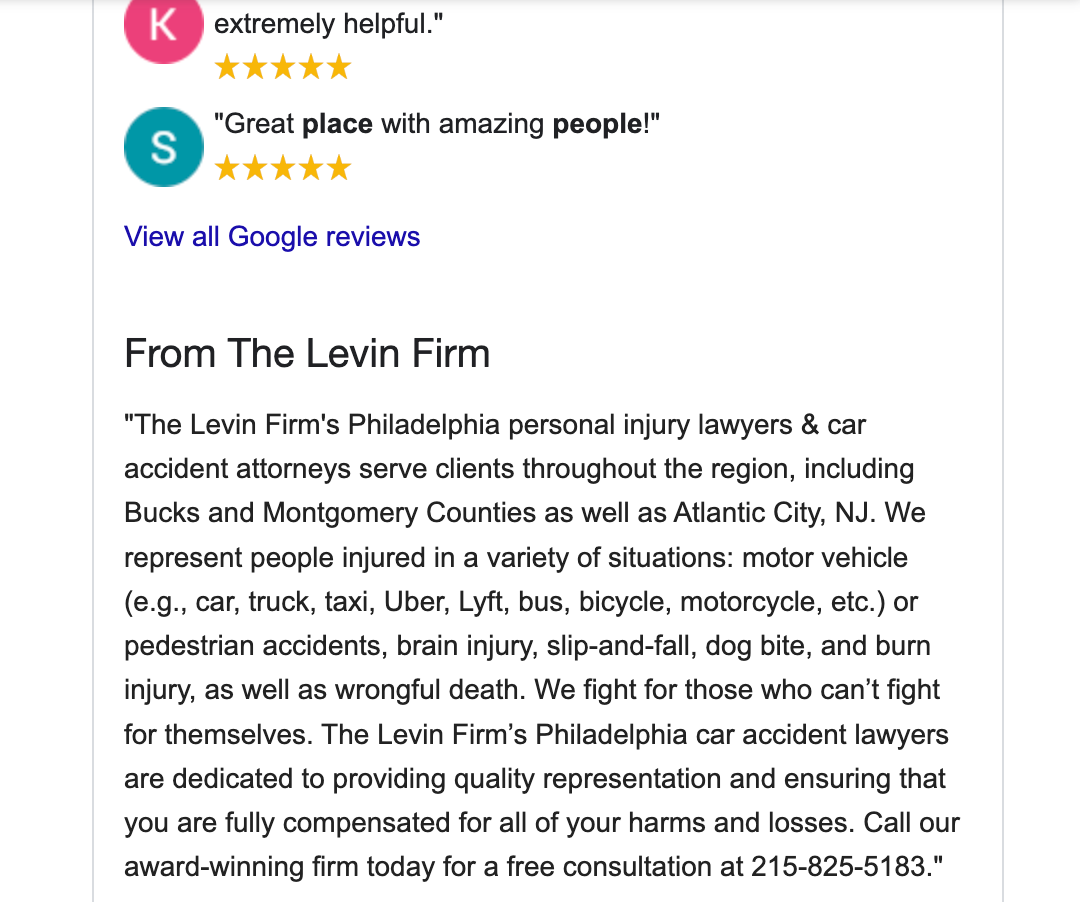
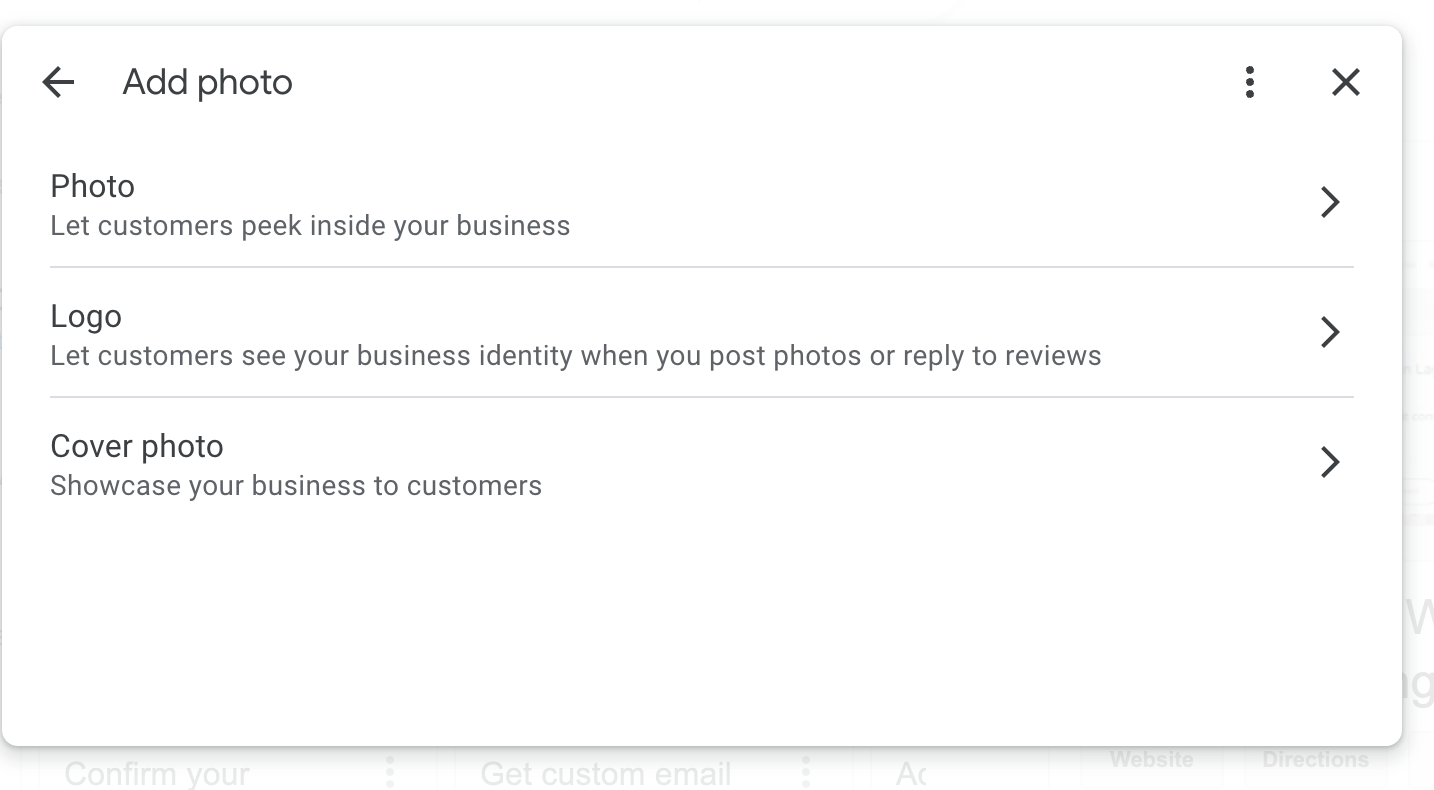
- [ ] Logo (Google says it helps customers recognize you).
- [ ] Cover photo that best represents the business.
- [ ] Exterior shots from the approach a customer takes, so they recognize the building.
- [ ] Interior shots, products or work, and the team.
- [ ] Real, high-quality images of your business only. No stock images, no text overlays, no promotional graphics in the gallery.
- [ ] Add a few new photos every month. Dated galleries look abandoned.
Want This Checklist As A PDF?
Every item on this page in one printable checklist, so you can audit your profile line by line and hand it to whoever manages the listing.
Download the GBP ChecklistGoogle Posts Checklist
Posts are short updates that show on your profile in Search and Maps. They’re the easiest way to show Google and customers that the business is active.
Three post types exist today, per Google’s help page: Update (text, photo or video, optional button), Offer (needs a title and dates, gets an automatic “View offer” button, can carry a coupon code and terms) and Event (needs a title and start and end dates and times).
- [ ] Publish an Update at least twice a month. Google archives posts older than six months unless they carry a date range, so irregular posting leaves the profile looking empty.
- [ ] Add an Offer whenever you have a real promotion, with an end date so it clears itself, and an Event for anything customers can attend.
- [ ] Use a photo on every post. Text-only posts get skipped.
- [ ] Keep phone numbers out of the post text. Google’s help page says posts with a phone number in the description can be rejected if it can’t verify the number belongs to the business.
Do posts move ranking? Google doesn’t say they do, and Whitespark’s 2026 survey doesn’t put them near the top. What they do is fill the profile with current, specific content and give searchers a reason to pick you over the profile that last posted in 2024.
Customer Questions Checklist
The public Questions and answers section is gone. Search Engine Roundtable reported in December 2025 that Google was retiring Q&A in Maps and replacing it with an AI “Ask” button. Customers type a question and get an instant answer built from the information you’ve given Google and from your reviews. Owners can still answer the questions already in their dashboard, and those answers can feed what Maps tells people.
So the work moved. You no longer seed questions; you make sure the profile already holds the answers.
- [ ] Write down the ten questions your front desk answers every week (parking, insurance, appointments, pricing, pets, what to bring), then check that each answer lives on the profile: in your services, attributes, hours, description or a post.
- [ ] Keep services, attributes and hours complete and current. A wrong hour on the profile becomes a wrong answer in Maps.
- [ ] Answer any questions your dashboard asks you. In August 2026 Search Engine Roundtable spotted Google testing a Q&A flow that asks owners yes-or-no questions about their business. Every one you answer is a fact Google doesn’t have to guess.
- [ ] If you see the Ask button on your profile in Google Maps, try it with the questions customers ask you. When an answer is wrong, fix the profile field it should have come from.
Reviews Checklist
Google’s local ranking page says “more reviews and positive ratings can help your business’s local ranking.” Whitespark’s 2026 survey put high numerical ratings sixth for the local pack and first for conversion. And BrightLocal’s 2026 Local Consumer Review Survey (1,002 US adults) found that 97% of consumers read reviews for local businesses, 89% expect owners to respond, and 74% look for reviews written in the last three months.
Three numbers to remember from that: you need Google reviews, you need recent ones, and you need to answer them.
Getting reviews
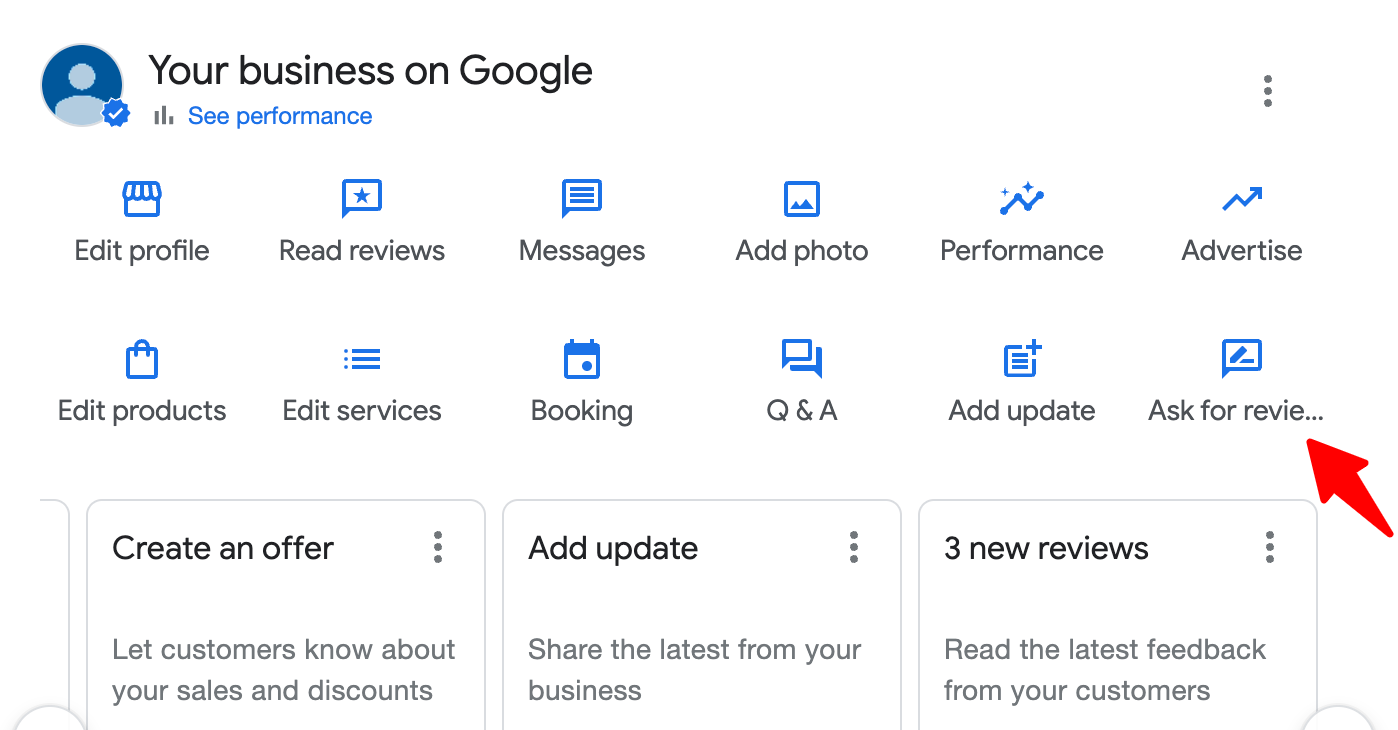
- [ ] Get your review link from the “Ask for reviews” button on your profile and save it somewhere everyone on the team can find it.
- [ ] Ask every happy customer at the moment the job ends, in person, by text or by email. Recency matters more than a backlog, so ask steadily rather than in bursts.
- [ ] Don’t offer money, discounts or gifts for reviews, and don’t gate the ask (only sending it to people you think will be positive). Both violate Google’s review policies and can get reviews removed or the profile penalized.
The Text We Send The Day A Job Finishes
It asks once, gives the link, sets a time expectation, and routes problems to you instead of to a public one-star. Send it the same day while the visit is fresh.
Responding to reviews
- [ ] Reply to every review, positive and negative, within a few days. Google’s own guidance: when you reply, “it shows that you value their feedback.”
- [ ] Thank positive reviewers by name and mention the specific service, which also puts natural keywords in the reply.
- [ ] On negative reviews, stay short and specific: acknowledge, state what you’ll do, move it offline. Future customers read the response more carefully than the complaint.
- [ ] Flag reviews that break Google’s policies (spam, conflicts of interest). Google won’t remove a review just because it’s negative.
Attributes Checklist
Attributes are the small labels on a profile: wheelchair accessible, outdoor seating, women-owned, appointment required, online appointments. Google says some you edit directly, and some are populated from inputs by customers who visit.
- [ ] Open Edit profile and go through every attribute group your category offers: accessibility, amenities, service options, planning, payments, identity (women-owned, veteran-owned, LGBTQ+ friendly and others).
- [ ] Tick everything that’s true. Google says available attributes depend on your location, country and category, so you won’t see every option.
- [ ] Leave off anything you can’t deliver. Attributes feed search filters, and “wheelchair accessible” on a profile with three steps at the door is a review waiting to happen.

Booking, Messaging And Links Checklist
This is the section where most older checklists are wrong, because two features changed.
Messaging
Google turned off Business Profile chat and call history on July 31, 2024, with new chats blocked from July 15. Search Engine Land reported Google’s reason as low usage. The old “Chat” button and the 24-hour reply rule are gone.
- [ ] Add the current chat option instead: under Contact, you can add a WhatsApp or text message link. Google says it’s available in select regions, and if you add both, only the text option shows to customers.
- [ ] Make sure the number you attach is one someone actually monitors.
Booking
- [ ] Add a booking link under the Booking section. Google lets you add up to ten links per category and mark one as preferred.
- [ ] If you use a scheduling provider Google works with, bookings can happen inside the profile and show up in your performance report as completed bookings.
- [ ] Review the provider links Google added automatically. Third-party partners can place booking or ordering links on your profile. If one is wrong, use “Remove provider”; Google says providers must process removals within five days.


Social and other links
- [ ] Add your social profiles. Google now lets you link one account each for Facebook, Instagram, LinkedIn, Pinterest, TikTok, X and YouTube.
- [ ] Click every link on the live profile once a quarter. Links rot.
Performance Insights Checklist
Your profile’s Performance report (Google’s name for the old Insights) shows what the profile is actually doing. Google’s help page lists these metrics: interactions, searches (the terms that surfaced your profile), views, directions, calls, website clicks, messages, bookings, product views, menu clicks and offer views and clicks. Only the ones that apply to your business appear.
- [ ] Open Performance monthly and record how many people call or message your business, request directions, click the website or book, in a simple sheet. Google only shows what it shows, so your sheet is your history.
- [ ] Read the Searches list. Google says it updates at the start of each month and can take up to five days to appear. The terms people used to find you tell you which services and categories are working.
- [ ] Compare profile views to actions. Lots of views and few calls usually means a weak description, photos or reviews, not a ranking problem.
- [ ] Add tracking parameters (UTM tags) to your website and booking links so Google Analytics shows profile visitors as their own source instead of lumping them in with organic search.
Monthly Maintenance: Keep Your Profile Fresh
The profile isn’t a form you fill out once. Google accepts public edits on Business Profiles, pulls data from third parties, and archives your posts. Left alone, a profile drifts.
- [ ] Log in and check for “pending edits” or Google-suggested changes to your name, hours, category or address. Approve the right ones and reject the rest. Yes, competitors and random users can suggest edits to your profile; this is where you catch them.
- [ ] Publish at least two Updates and one Offer or Event if you have one.
- [ ] Upload a few new photos.
- [ ] Reply to every new review, and answer any questions your dashboard asks you.
- [ ] Add special hours for the coming month’s holidays.
- [ ] Record Performance numbers.
- [ ] Click your website, booking and menu links from the live profile.
- [ ] Once a quarter: re-check categories, services, attributes and your map pin.
The monthly 30-minute version: pending edits, two posts, five photos, reviews replied to, dashboard questions answered, next month's holiday hours, performance numbers written down.
- Pending edits
- Posts
- Photos
- Reviews
- Holiday hours
- Numbers
The Google Business Profile Audit Checklist On One Page
Here’s every section above as one simple checklist, split by whether it’s a one-time setup or something that goes on the calendar. Run a full audit every quarter against it; for a GBP audit of several locations, do one profile at a time.
| Checklist item | Done once or ongoing |
|---|---|
| Find or create your profile with a company-owned Google account | Done once |
| Verify the profile (video, live call, phone, email, postcard or instant) | Done once |
| Add managers; keep ownership with the company | Done once, review when staff change |
| Business name matching the real world, no added keywords | Done once |
| Address or hidden address plus service areas; map pin on the door | Done once, check quarterly |
| Phone and website link | Done once |
| Regular hours, more-hours sets | Done once |
| Special hours for holidays | Ongoing, monthly |
| 750-character description, opening date | Done once, revisit yearly |
| Primary category and minimal additional categories | Done once, re-check twice a year |
| Services with descriptions and prices | Done once, update as the offer changes |
| Products or structured menu | Done once, update as the offer changes |
| Logo, cover, exterior, interior, team and work photos | Done once, then a few new photos monthly |
| Updates, Offers and Events | Ongoing, at least twice a month |
| Profile answers your ten most-asked customer questions (services, attributes, hours) | Done once, check quarterly |
| Answer any questions your dashboard asks you | Ongoing |
| Review link shared with the team and in follow-ups | Done once |
| Ask for reviews steadily; reply to every one | Ongoing |
| Attributes: accessibility, amenities, identity, service options | Done once, check quarterly |
| WhatsApp or text chat link | Done once |
| Booking, appointment, menu and ordering links; remove wrong providers | Done once, check quarterly |
| Social profile links (one per platform) | Done once |
| Record Performance metrics; read the Searches list | Ongoing, monthly |
| Approve or reject pending edits | Ongoing, monthly |
What A GBP Optimization Service Should Actually Include
If you’re evaluating a proposal from an agency or freelancer, measure it against the list above. A real engagement covers every “done once” row, then hands you (or runs) the “ongoing” rows: category research, a written description, services and products entered by hand, a profile complete enough to answer customer questions in Maps, a review process your team can follow, and a monthly report built from the Performance metrics.
What it shouldn’t include: keywords added to your business name, bulk reviews, a promise of the number one spot, or “submitting your listing to Google,” because there’s nothing to submit.
Our local SEO services treat the profile as one piece of the local work, alongside the website pages it links to and the citations that build prominence.
The Profile Is The Lead Source, So Work It Like One
Most local businesses treat the Business Profile as a listing they filled out once. Google treats it as the primary answer to every “near me” search in your category. That gap is the opportunity.
Optimize your Google Business Profile once by going through the “done once” rows this week. Put the “ongoing” rows on a monthly calendar reminder; that’s what will improve your local SEO over time, not the setup. And if you’d rather have someone else own the whole list, that’s what we do.
Frequently Asked Questions
They’re the same thing. Google renamed Google My Business to Google Business Profile in November 2021 and retired the separate app in 2022. You now manage the profile by searching your business name on Google while signed in, or through Google Maps.
It depends on the change. Most edits appear within minutes to a few days, though some go through review first. Verification reviews take up to five business days per Google. Ranking movement depends on your starting point: a verified profile with a wrong category or thin information can move within a few weeks of fixing it, while a brand-new profile in a crowded city is competing against years of reviews and usually needs several months of steady work.
Not the version most guides describe. Google shut off its built-in chat and call history on July 31, 2024. What’s left is a contact option where you add a WhatsApp or text message link, available in select regions. If you add both, customers see only the text option.
Monthly at minimum: check pending edits, post at least twice, add photos, reply to reviews, answer any questions your dashboard asks, add holiday hours and record your Performance numbers. Google archives posts older than six months unless they have a date range, so an untouched profile looks empty fast.
Yes. Creating, verifying and managing a profile costs nothing, and Google says there is no way to pay for a better local ranking. Ads can appear near the map, but they’re a separate product and don’t change where your profile ranks.
Want Us To Handle Your Profile?
- A line-by-line audit of your Business Profile against this checklist
- Where your calls, directions and bookings are leaking to competitors
- A 90-day local plan you can run with or without us
