
Search engine optimization used to be reserved for companies with deep pockets and dedicated digital marketing teams. Not anymore. The way people search has changed; they’re not just looking for products and services, they’re looking for them nearby. This shift in search behavior has opened the door for small businesses to compete with bigger players without matching them dollar-for-dollar on ad spend.
Four out of every five customers use search engines to find local businesses. “Near me” searches have exploded, and mobile users expect to find what they need within driving distance. SEO is essential for small business growth because it connects you with people who are already looking for what you sell right in your area.
Too many small business owners assume SEO is too technical or too expensive, so they avoid it entirely. Instead, they dump money into pay-per-click ads and paid social, missing out on high-quality organic traffic that costs less to acquire and converts better.
This guide walks you through what you need to know about SEO for small businesses, why optimizing for local search behavior matters, and how to actually implement it without getting lost in the weeds.
What Is Local SEO for Small Businesses?
Local SEO helps your business appear in search results when potential customers in your area search for your product or service. Instead of competing for generic search terms nationally, local SEO focuses on geo-specific searches.
Think about how you search. When you need a dentist, you don’t just search “dentist”, you search “dentist near me” or “dentist in Philadelphia.” That’s local search in action.
When someone enters a local search term, Google matches their location to relevant nearby business listings. It makes sense to recognize local intent even without “near me”- search for “gas station” and it assumes you want one close by.
PRO TIP
Why SEO Is Important for Small Businesses
The Local 3-Pack: Prime Real Estate You Can't Ignore
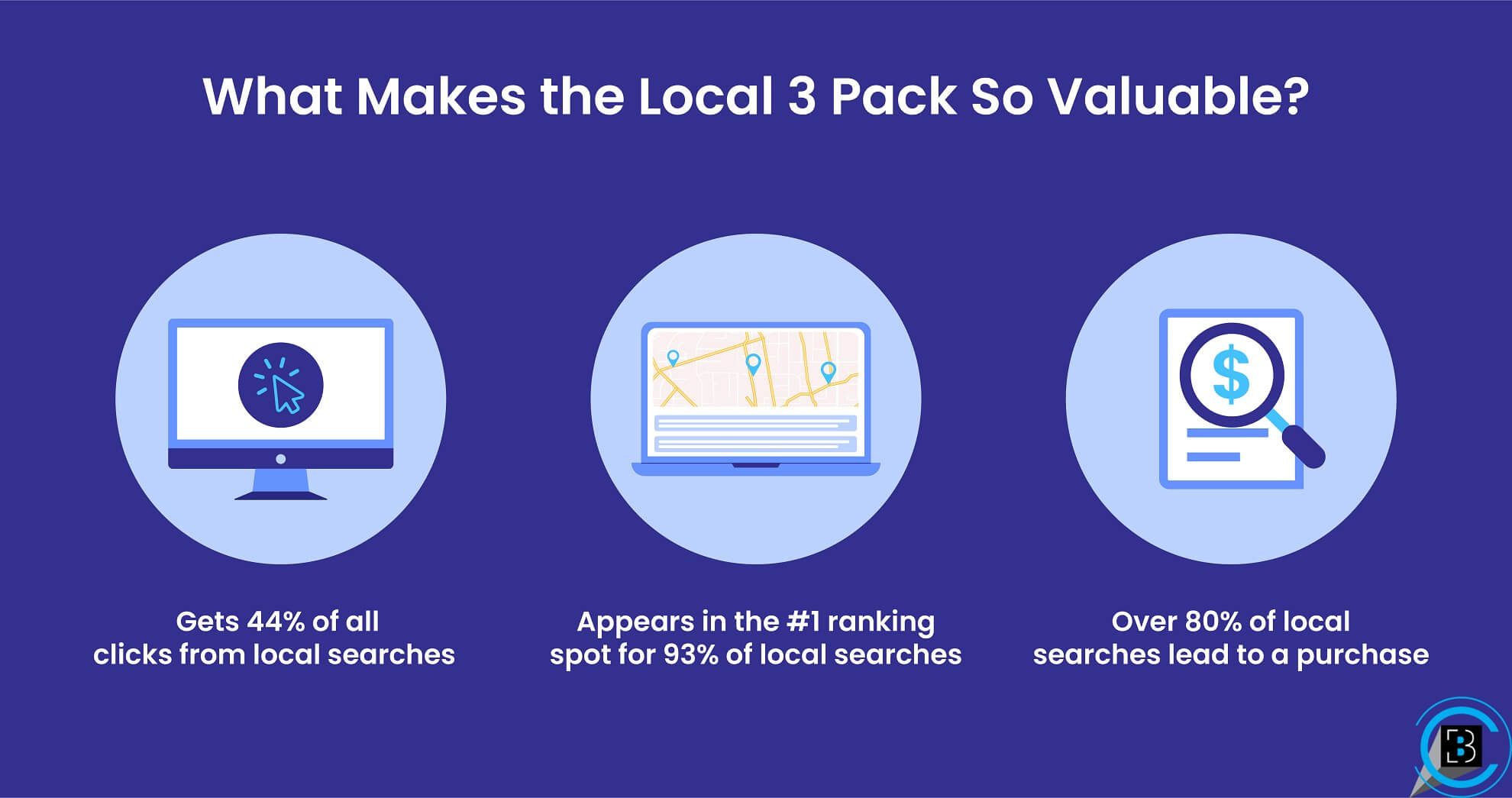
Ever notice that map with three business listings at the top of the search engine results page? That’s the Local 3-Pack, and it’s where you want to be.
The Local 3-Pack gets 44% of clicks from all local searches. With local searches accounting for 46% of all Google searches and Google handling over 1.2 trillion searches per year, we’re talking about hundreds of billions of potential customer interactions.
Here’s what makes this so powerful: over 80% of local searches lead to a purchase. That’s not window shopping- these are people ready to buy.
Benefits of SEO for Small Business Growth
Beyond the Local 3-Pack, here’s why investing in SEO helps your business:
- Credibility and Trust: When your business appears at the top of search results or on Google Maps, it signals legitimacy. Customers are more likely to trust and contact businesses that rank well in search engines.
- Return on Investment: SEO for small businesses offers significantly higher long-term ROI than paid advertising. Whether you DIY or hire an agency, your cost per acquisition through organic search is typically a fraction of what you’d pay for Google Ads or Facebook Ads.
- Sustainable Growth: Unlike paid ads that stop working the moment you stop paying, good SEO builds momentum over time. The work you do today continues generating traffic and leads months and years down the line.
How Local SEO Helps Small Businesses Compete
The goal of SEO is simple: make it easier for the right customers to find you when they’re searching for what you offer.
Here’s why local SEO is so important for small businesses looking to grow:
| Local SEO Statistics | Impact |
|---|---|
| 'Near me' + 'where to buy' searches | Up 200% in two years |
| Mobile local searches leading to store visits | 76% within one day |
| Monthly location visits from Google searches | 1.5 billion+ |
| Google searches with local intent | 46% |
| Customers search for local businesses daily | 84% |
PRO TIP
Understanding How Search Engines Rank Local Businesses
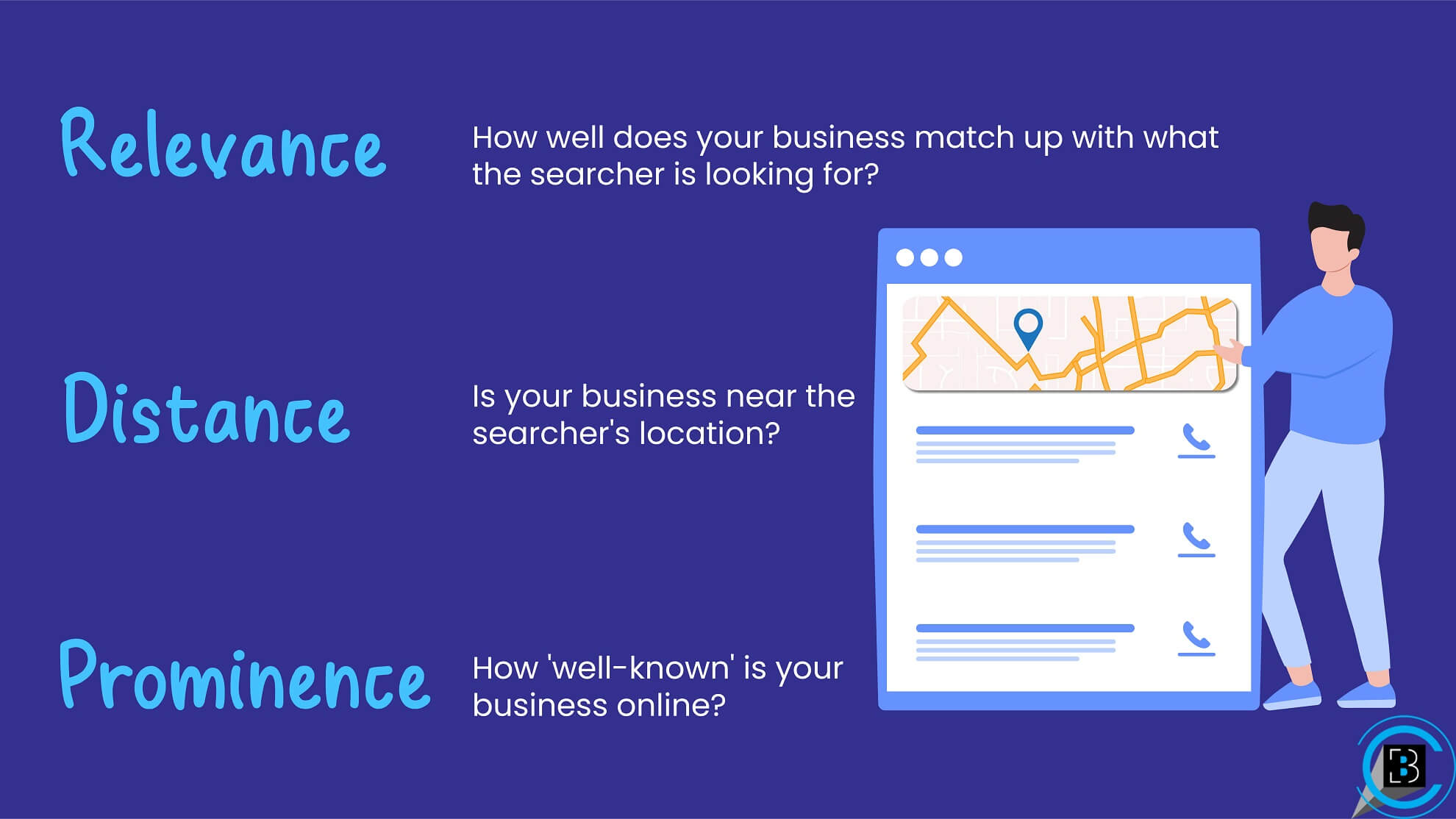
Google uses three primary factors to determine where your business appears in local search results:
- Relevance: How well your business matches what the searcher is looking for
- Distance: How close your business is to the searcher’s location
- Prominence: How well-known and trusted your business is based on reviews, links, and citations
These ranking factors should guide every local SEO strategy you implement.
SEO Strategies for Small Business: What Actually Works
Now let’s get into the tactics. Here are the most effective SEO strategies for small businesses ready to improve their local search rankings.
1. Set Up Your Google Business Profile (Start Here)
Setting up a Google Business Profile is the single most important step for local SEO. Your profile influences all three local ranking factors and positions you across Google Search, Google Maps, and the Local 3-Pack.
Create your profile at business.google.com and fill out every section:
- Business category and description
- Accurate address and phone number
- Service areas
- Hours of operation
- Photos of your location, team, and work
For businesses with multiple locations, create a separate Google Business Profile for each one.
PRO TIP
2. Keep Your NAP Consistent Everywhere
NAP stands for Name, Address, and Phone Number. Search engines use this information to verify your business and match you with relevant searches.
Your NAP must be identical everywhere it appears online:
- Your website
- Google Business Profile
- Yelp
- Business directories
- Citation sites
Even small inconsistencies, like “Street” vs. “St.” or different phone numbers, confuse search engines and hurt your rankings.
PRO TIP
3. Get More Reviews (and Respond to Them)
Reviews are critical for local SEO. Google uses them to determine whether to recommend your business to local searchers. More positive reviews = higher rankings and more trust.
Focus on these platforms for maximum SEO benefit:
- Google Business Profile
- Google Maps
- Apple Maps
- Bing Places
Make it easy for customers to leave reviews by sending them direct links after a purchase or service. Offer small incentives when appropriate, but never pay for fake reviews.
Always respond to reviews, both positive and negative. This shows you’re engaged and care about customer feedback.
4. Build Local Citations and Expand Your Digital Presence
Local citations are mentions of your business on other websites, even without a direct link. The more quality citations you have, the more prominent Google considers your business.
Get listed on these major sites:
- Yelp
- Better Business Bureau (BBB)
- Yellow Pages
- TripAdvisor
- Industry-specific directories
Social media activity also builds your digital presence. Post regularly on Facebook, Instagram, LinkedIn, and Twitter. Share local content, run promotions, and engage with your community.
5. Optimize Your Website for Local Search
Your website should clearly signal to search engines that you serve a specific local area. Here’s how to optimize it:
- Headers and Title Tags: Include your city name and primary local keywords in your homepage H1 and title tags.
- Meta Descriptions: Write compelling meta descriptions that include local search terms and encourage clicks.
- Location Pages: If you serve multiple areas, create dedicated pages for each location with unique, locally relevant content.
- Embedded Maps: Add an embedded Google Map of your location to your contact page. This sends direct signals to Google about your geographic relevance.
- Images: Include photos of your location and the areas you serve. Optimize file names and alt text with location names.
PRO TIP
6. Research and Use Local Keywords
Effective SEO starts with understanding what your local customers are actually searching for. Use tools like Ahrefs, SEMrush, or Google’s autocomplete feature to identify local search terms.
Don’t just think “restaurants”, think “Italian restaurant in downtown Philadelphia,” “best pizza near Reading Terminal,” or “family-friendly brunch spots in Society Hill.”
Include these keywords naturally throughout your:
- Homepage content
- Service pages
- Blog posts
- Location pages
- Meta descriptions
PRO TIP
Not sure which keywords your local customers are actually searching for?
7. Build Authority with Local Links
Inbound links from other reputable local websites strengthen your domain authority and improve your search rankings. The difference between regular SEO and local SEO here is that it focuses on local link sources.
Local link-building tactics:
- Sponsor local events or sports teams
- Partner with local bloggers and influencers
- Guest post on local news sites or community blogs
- Get featured in “best of” local business roundups
- Join the local chamber of commerce
8. Create Local Content That Helps Your Community
Content marketing and SEO work hand-in-hand. Create content that addresses local issues, capitalizes on community events, and answers questions specific to your area.
Examples:
- “Best Hiking Trails Near [Your City]” (if you sell outdoor gear)
- “How to Prepare Your Home for [City] Winter Weather” (for contractors)
- “[City] Business Spotlight Series” (for professional services)
This type of content attracts local customers, earns local links, and establishes you as a community-focused business.
9. Stay Consistent with Your SEO Efforts
Here’s the truth about SEO: it’s not a one-time project. Search engine optimization is an ongoing process that requires regular attention.
Google wants to see consistent activity:
- Updating your Google Business Profile
- Responding to reviews
- Publishing new content
- Monitoring your search rankings
- Fixing technical issues
Set a schedule, whether that’s weekly or monthly, and stick to it. Sporadic bursts of activity don’t work as well as steady, consistent effort.
PRO TIP
Ready to Scale Your SEO Efforts?
10. Follow SEO Best Practices (and Avoid Penalties)
Search engines are constantly evolving. What worked five years ago might hurt you today. Here are the SEO basics that matter right now:
Do:
- Create genuinely helpful content for your audience
- Use keywords naturally (not stuffed awkwardly into every sentence)
- Make your website fast and mobile-friendly
- Build real relationships that lead to authentic links
- Focus on user experience
Don’t:
- Buy links or participate in link schemes
- Copy content from other websites
- Stuff keywords unnaturally
- Create doorway pages or duplicate content
- Hide text or links from users
Stay current on Google’s algorithm changes. Major updates can significantly shift rankings, and you need to adapt.
11. Track Your SEO Results and Adjust
You can’t improve what you don’t measure. Use Google Search Console and Google Analytics to monitor:
- Which local searches bring traffic to your website
- How many people find your business through Google Maps
- Which pages get the most organic traffic
- Where visitors go after landing on your site
- How many organic visitors become customers
This data helps you understand what’s working, what needs improvement, and where to focus your efforts.
The Value of SEO for Your Small Business
Local SEO isn’t just another marketing tactic; it’s how your customers find you. When done right, SEO for small businesses creates a sustainable stream of qualified leads without the ongoing costs associated with paid advertising.
Small businesses that implement these SEO strategies consistently see:
- More website traffic from local searches
- Higher-quality leads who are ready to buy
- Better conversion rates from organic visitors
- Reduced reliance on expensive paid ads
- Improved brand recognition in their local market
The importance of SEO for small businesses can’t be overstated. It’s the most cost-effective way to compete with larger competitors and establish your business as the go-to choice in your area.
Turn Your Website Into a Lead-Generation Machine
The businesses winning in search aren’t the ones with the biggest budgets; they’re the ones adapting fastest to how people find information today.
At BCC Interactive, we help small and mid-sized businesses build sustainable marketing strategies that work across traditional search and emerging AI platforms. We bring Fortune 500-level expertise without the Fortune 500 price tag or the typical agency games.
Search behavior is evolving fast from Google to ChatGPT to voice assistants. We make sure your business shows up wherever your customers are looking.


