Healthcare SEO That Books Patients, Not Just Traffic
Free 30-minute call. No pitch deck. You keep the roadmap either way.
Ranked keywords, page-one rankings and #1 ranking: Semrush. Read the Dr. Seltzer case study
Sound Familiar?
Competitors Own The Map Pack
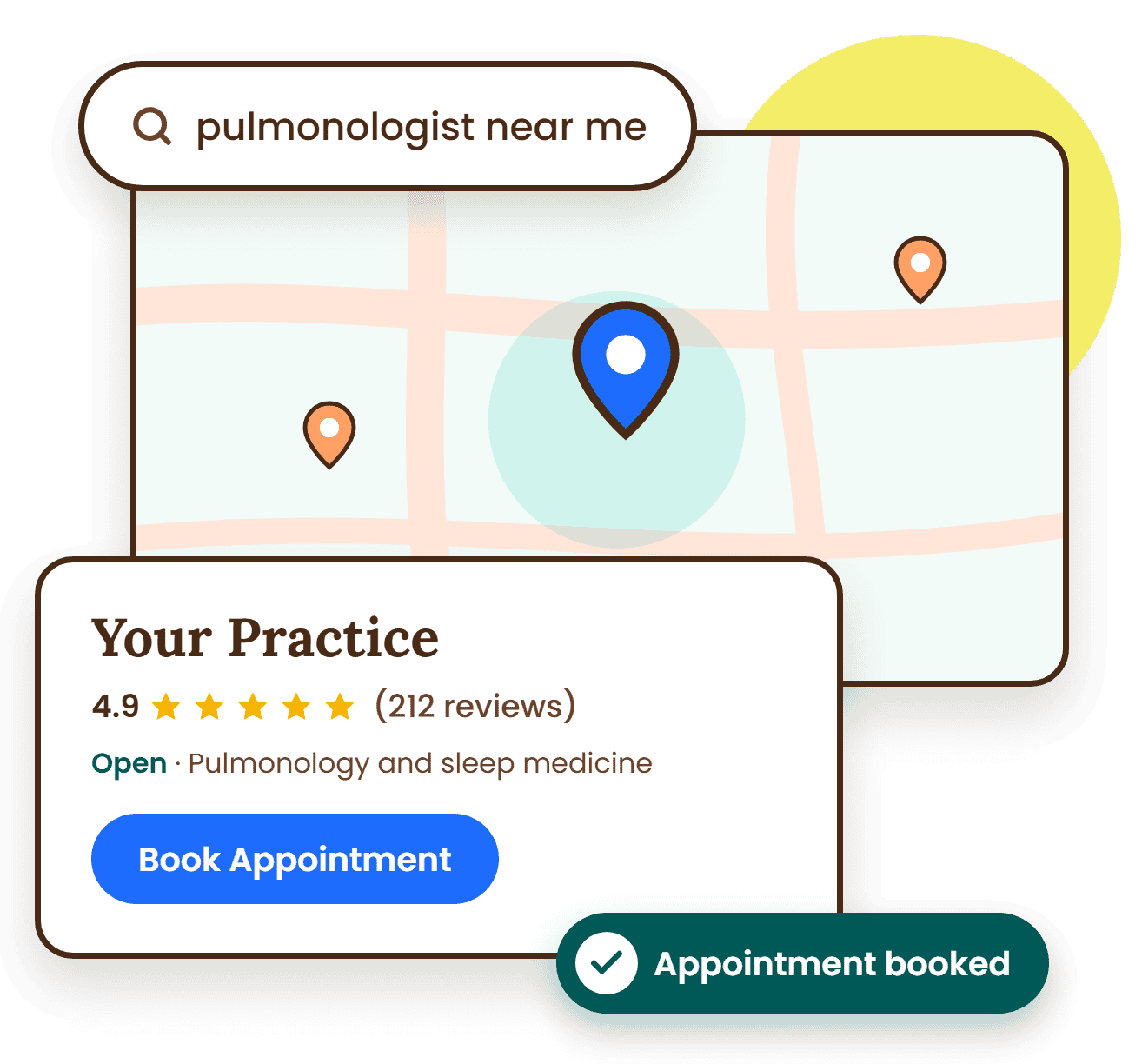
A patient searches for your specialty near them, and three other practices show up in Google Maps. Their care isn’t better. Their Google Business Profile, reviews and location pages are.
Directories And Ads Take A Cut Of Every Patient
New patients come from paid directories and Google Ads. Turn the spend off and the phone stops ringing, because nothing organic is ready to carry the practice.
Google Holds Health Pages To A Higher Bar
Health is what Google calls a “Your Money or Your Life” topic, where its systems give extra weight to signals of experience, expertise and trust. Thin service pages with no clinical expertise behind them struggle to rank.
AI Answers Skip Your Practice
Patients now use AI search too. They ask ChatGPT or Google’s AI Overviews what kind of doctor treats their symptoms and who’s good nearby. If your site doesn’t answer those questions clearly, the answer names someone else.
How Patients Search, And What We Build For Each Stage
Symptom Or Condition
Condition and symptom content, built on your practice’s clinical expertise, that answers the question in plain language and explains when it’s time to see a specialist. This is where a patient first learns your practice exists.
Treatment Or Specialist
Service and treatment pages built around what patients actually search for, with the physician’s credentials right on the page. Most practices bury this under one generic “Services” page.
Near Me And Reviews
A Google Business Profile and a location page for every office, plus a steady flow of patient reviews, so each office competes for the map pack on its own.
Ready To Book
Brand coverage, clear insurance and booking information, and appointment tracking tied back to the search that started it.

How NOVA Pulmonary Made Three Offices Findable In Search
Dr. Aditya Dubey’s Northern Virginia practice had the reputation, but online it was basically invisible, and new patients came almost entirely from paid directories and Google Ads. The plan: build an organic presence strong enough to grow the practice without constant spend.
- A local page for every office. Lansdowne, Dulles/South Riding and Vienna each got their own optimized page, built for how patients search by neighborhood, instead of one generic practice page.
- Google Business Profiles for all three offices. The profile work set up every office to compete for local visibility on its own, not just the main location.
- Content built around symptoms and questions. Generic service pages were restructured around the questions and symptoms that bring patients to a pulmonologist and sleep specialist in the first place.
- Authority, technical fixes, citations and reviews. Authority-building, site health fixes, and citation and review management closed the gaps that were quietly costing the practice appointments.
“Our organic search traffic grew significantly after working with BCC.”
“Higher search rankings, more leads, and most importantly, more patients.”
What We Run For Medical Practices
SEO
- A keyword map built from your conditions, treatments and specialties, not a generic list
- Condition and treatment pages with real clinical expertise behind them, built for Google’s higher trust bar on health topics
- Technical SEO for healthcare websites: site speed, mobile optimization, structured data and clean indexing
Local SEO
- A Google Business Profile for every office, set up to compete on its own
- Location pages for each office and the neighborhoods it serves
- Review and citation management, so your listings match everywhere patients look
AEO
- Get named when patients ask AI assistants which doctor or clinic treats their condition
- Consistent practice facts across your site, listings and healthcare directories, so AI answers describe you correctly
- Tracking of where AI Overviews and ChatGPT mention your practice, and where they don’t
Paid Search
- Google Ads on high-intent treatment, specialist and “near me” searches, built within Google’s Healthcare and medicines policy
- Audiences that respect Google’s limits on health-based targeting
- Booked-appointment tracking set up so patient health information isn’t sent to ad platforms
What Makes Healthcare SEO Different
Trust Is The Ranking Bar
Google gives extra weight to experience, expertise and trust on health topics, and its own guidance says “trust is most important.” That means real physician bios, content with clinical expertise behind it and a consistent reputation across the web.
Every Office Competes On Its Own
A multi-location practice isn’t one business in Google Maps. It’s three or five, each fighting a different set of local competitors, so each office needs its own profile, page and reviews.
Patients Check Insurance First
Plenty of searches end the moment a patient can’t tell whether you take their plan, where to park or how soon they can be seen. Clear insurance and booking pages turn a visit into an appointment.
Tracking Has Privacy Rules
Federal guidance limits what tracking on healthcare websites can share. We count booked appointments without sending patient health information to ad platforms, and bring in your compliance team before anything touches a logged-in page.
SEO For Dental Practices
Dental practices search like medical practices, only more local. Patients look for a dentist near home or work, compare reviews, and check whether you take their insurance before they ever call. The same playbook applies: a Google Business Profile and location page for every office, treatment pages for the services you want more of, and a steady flow of reviews.
Our guide to SEO for dentists walks through exactly how we’d build it.
Our Healthcare SEO Strategy, Step By Step
SEO Audit And 90-Day Roadmap
We start with what’s already working. Which pages and profiles bring in appointment requests today, which rank on page two and need a push, and where competitors are winning patient searches you should own. That becomes your roadmap: the first 90 days, in order of impact. Start with your free roadmap →
Google Business Profile And Location Pages
For most practices the fastest wins are local. We clean up every office’s Google Business Profile, fix inconsistent listings, and build a location page for each office so it can compete in local search on its own.
Keyword Map Built From Your Specialties
Most medical SEO strategies start with a keyword tool. Ours starts with your practice: the conditions you treat, the procedures you want more of, and the questions patients ask in the exam room. Then we match each one to how patients actually search.
Medical Content Built Around Your Practice
We write condition, treatment and FAQ healthcare content in plain language, and we tailor the process to each practice: how involved your physicians want to be, who reviews what, and how credentials show up on the page, because that’s the trust signal health content needs.
Technical SEO, Reviews And Authority
Our healthcare SEO services fix site speed, mobile optimization, structured data and indexing so Google can read the pages that book patients. Then we build authority through reviews, citations and links from sources your patients already trust.
Report On Booked Appointments
Every month you see what your SEO campaign did for the practice: appointment requests, calls and new patients by office, not just rankings. Then we adjust the plan based on what’s converting.
How We Measure Healthcare SEO
- Booked appointments and appointment requests from organic, local and paid search, by landing page and by office
- Calls from search from your Google Business Profiles and your website, so phone bookings aren’t invisible
- Map pack visibility for each office, across the neighborhoods it serves
- Cost per new patient lead across organic, paid search and paid directories, so you can see which channel is worth the money
- AI visibility how often your practice is named or cited in AI Overviews and ChatGPT for your specialty
Healthcare SEO Guides


Healthcare SEO Questions, Answered
A healthcare SEO agency helps medical practices, doctors and other healthcare providers get found by the patients who need them. Whether you call it healthcare SEO, medical SEO or SEO for doctors, the work is the same. That means keyword research built around your conditions and treatments, local SEO and a Google Business Profile for every office, content with clinical expertise behind it, technical SEO, and tracking that connects search to booked appointments. We also cover AEO (answer engine optimization), so you show up in AI answers, and paid search for the searches that can’t wait on organic.
The basics are the same, but the bar is higher. Google gives extra weight to trust on health topics, so medical content needs named, qualified authors or reviewers. Most practices also live or die in local search, and tracking has privacy rules that a generic SEO agency may not know about. Good SEO for medical practices has to cover all three, which is why a medical SEO agency and a regular SEO company can produce very different results.
It depends on where you start. An established practice with gaps in its targeting or its Google Business Profile can see movement in about 60 to 90 days. A site that needs bigger fixes, or sits in a crowded market, is usually more like 3 to 6 months. A newer practice going after competitive terms can take 6 to 12 months or longer. Your roadmap maps your starting point first. More on that in how long SEO takes.
Yes. Dental SEO runs on the same local playbook as medical SEO: a Google Business Profile and location page for every office, treatment pages and reviews. Start with our guide to SEO for dentists.
Yes. Dr. Charlie Seltzer runs a single-location lifestyle medicine practice in Philadelphia. During our engagement his site went from 81 ranked keywords to 2,282, and from 12 page-one rankings to 96 (Semrush). A year after it ended, it held #1 for “weight loss philadelphia,” “philadelphia weight loss doctor” and “trt philadelphia” (Semrush). Read the Dr. Charlie Seltzer case study.
Yes. For a multi-location practice, every office gets its own profile, its own location page and its own review plan, so each one competes in its own neighborhood. That’s the core of what we did for NOVA Pulmonary’s three offices.
We set up tracking so booked appointments are counted without sending patient health information to ad or analytics platforms, and we keep tracking off patient portals and other logged-in pages unless your compliance team signs off. HHS’s Office for Civil Rights has issued guidance on online tracking technologies, and a federal court (American Hospital Association v. Becerra) later vacated part of it for public, logged-out pages. The guidance on patient portals and other logged-in pages still stands, so your counsel makes the final call on anything that touches patient data.
Usually, yes, alongside SEO. Paid search covers high-intent searches like “[specialty] near me” while organic catches up. As a healthcare PPC agency we build campaigns within Google’s Healthcare and medicines policy, which requires certification for some services, such as addiction treatment and telemedicine, and limits health-based audience targeting.
It’s a free 30-minute call on Zoom, and Cory runs it himself. Before we talk, we audit your site and check how ChatGPT, Gemini and Perplexity describe you. On the call we show you the gaps, what your competitors are doing and the first 90 days, ranked by impact. No pitch deck, and you keep the roadmap whether or not we work together.
Every plan is a custom solution, scoped to your goals, your starting point, how many offices you run and how fast you want to move. The roadmap call is where we size it. If you want a sense of the market first, our SEO pricing guide breaks down what agencies charge and why.
Lists of the best healthcare SEO agencies mix SEO agencies whose SEO strategies stop at rankings, content shops that publish blog posts, and the digital marketing agency where SEO is one line item. Any marketing agency can claim healthcare experience. What matters is whether your SEO partner can connect search to booked appointments across Google, the map pack, AI answers and paid ads. Ask for results from a healthcare practice with dated numbers and a named source, and ask what they’ll do in the first 90 days. If a healthcare SEO company can’t show you that, it’s selling rankings, not new patients. We wrote a full guide on how to choose an SEO agency.
No, and we’d rather be upfront about it. We work with B2B companies, e-commerce brands and other local businesses too. Our healthcare experience comes from practices like NOVA Pulmonary and Dr. Charlie Seltzer. What carries over is the part that matters for doctors: building search around how patients research, compare and book, then tracking it to appointments.
Get A 90-Day Roadmap For Your Practice